Categories
Press Releases

FUTURE HVACR LEADERS WIN #MASTEROFTHETRADE SCHOLARSHIPS FROM FIELDPIECE INSTRUMENTS AT THE NATIONAL LEADERSHIP & SKILLS CONFERENCE 2024

Six Outstanding HVACR Students Awarded Scholarships Totaling $10K to Propel Their Educational and Professional Journeys

ORANGE, CALIF. (July 9, 2024)Fieldpiece Instruments, a leader in HVACR test tools and instruments since 1990, proudly awarded $10,000 in scholarships to six exemplary HVACR students at the National Leadership & Skills Conference (NLSC) held June 24 to June 28. These scholarships, administered through SkillsUSA, are part of Fieldpiece’s #MasteroftheTrade scholarship program designed to support and give back to the industry by helping students pay their educational and professional training expenses.

Tony Gonzalez, director of training at Fieldpiece, highlighted the company’s commitment to nurturing future HVACR professionals. He remarked, “Fieldpiece is dedicated to equipping HVACR professionals—both novices and seasoned experts—with the tools, knowledge and resources essential for success. The #MasteroftheTrade Scholarship program, together with our comprehensive range of support measures like student discounts and free Fieldpiece University online training, is designed to push HVACR careers to new heights. We are honored to support this year’s recipients and look forward to their future achievements.”

The scholarships were awarded to students who achieved top rankings in their respective categories at the NLSC, reflecting their dedication and skills in the HVACR trade. The six winners are:

High School

  • Cole Kelley | Billerica, MA
  • Braden Kott | Ardmore, OK
  • Jackson Schaffer | Brooklyn Park, MN

College

  • Jantzen Fisher | Rapid City, SD
  • Luke Reynolds | Lehi, UT
  • Elijah Glenn | Springfield, MO

The HVACR sector is known for its rewarding career paths and professional independence, underscored by a growing demand for skilled technicians. The #MasteroftheTrade Scholarship program supports aspiring HVACR pros who will be critical to maintaining energy conservation standards and ensuring the comfort and safety of communities nationwide for generations to come.

For more information about Fieldpiece, visit www.fieldpiece.com.


About Fieldpiece Instruments: Fieldpiece Instruments is dedicated to making the jobs of HVACR professionals easier, faster and better. Fieldpiece pioneers innovative technologies and offers a wide range of industry-leading tools, designed and inspired by real-world needs and applications. Dedicated exclusively to the HVACR industry, Fieldpiece helps professionals master their trade. For more information, visit www.fieldpiece.com.

About SkillsUSA: SkillsUSA is a partnership of students, teachers and industry working together to ensure America has a skilled workforce. SkillsUSA helps students excel in skilled trades, providing educational programs, events and competitions that support career and technical education (CTE) in the nation’s classrooms. For more information, visit www.skillsusa.org.

# # #

FOR IMMEDIATE RELEASE
MEDIA CONTACTS                              

Fieldpiece Instruments:
Leslie Licano, Beyond Fifteen Communications, Inc.
Phone: 949.733.8679 x 101
Email: leslie@beyondfifteen.com


SkillsUSA:
Jane Short or Karen Kitzel
Phone: 703.777.8810
Email: jshort@skillsusa.org or kkitzel@skillsusa.org


Categories
Blog

Better than Bubbles | The Ins & Outs of Electronic Leak Detectors

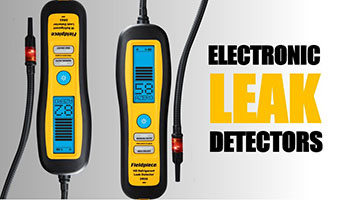
Okay, we know soap bubbles are the traditional method for refrigerant leak detection on HVACR systems and they can be a very tried and true indicator. But when you need to pinpoint micro-leaks fast, an electronic detector with a higher sensitivity than bubbles can be the ticket.

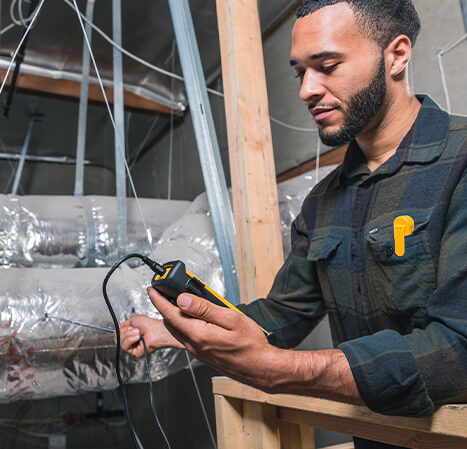
The four main types of electronic leak detectors available to HVACR techs include: heated diode, corona discharge, infrared and ultrasonic. The following is a snapshot of how the different technologies work and the ins and outs of each to help you determine which is the best fit for your toolkit.


Heated Diode Detectors

With a heated diode detector, sampled air is heated to a high temperature, ionizing halogenated refrigerant gases. The resulting charged chlorine and fluorine ions, even in trace amounts, generate current through the diode which then triggers an alarm. Heated diodes detect leaks of HFC, CFC, HCFC, HFO, H2N2 (Tracer Gas) and other refrigerant blends. The Fieldpiece DR58 Heated Diode Leak Detector performs particularly well with R410A and sniffs refrigerant leaks as small as 0.03 oz/yr – that’s 20 times more sensitive than soap bubbles.

Heated diode detectors are not prone to false alarms, but their sensor life may be affected by excessive refrigerant exposure and contaminants like oil. The sensor should be checked regularly with a calibrated reference leak. It is recommended to replace to the Fieldpiece DR58 sensor after approximately 300 hours of use.
 

Corona Discharge Detectors

In a process similar to heated diode detectors, corona discharge detectors also react to a change in current flow from ionized gases. However, they pull sample air through an electrical field around an electrode. Gases are broken down by the electric arc (corona discharge), causing a change in electrode current which then signals a leak.

False alarms can occur with corona discharge detectors because they do not trigger on specific refrigerant compounds. Response times are slightly slower than heated diodes and corona sensor life can be as short as 24 hours of use.


Infrared Leak Detectors

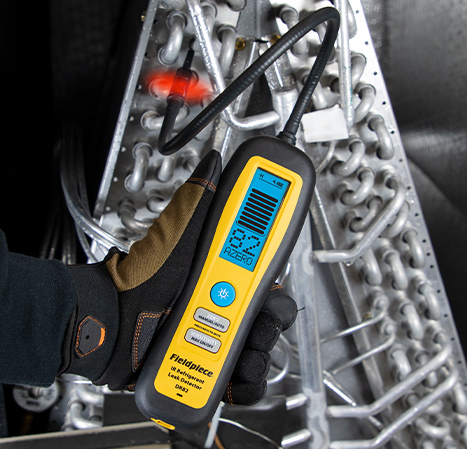
Infrared detectors shine a beam of infrared (IR) waves through potentially contaminated air to detect and analyze trace amounts of refrigerant and signal a leak. Because light absorption in the IR spectrum is gas-specific, they are the least susceptible to false-positive alarms and considered highly accurate across all refrigerant types. Infrared detectors also have the edge with newer refrigerants that contain less chlorine and fluorine, the trigger for heated-diode sensors.

When considering the cost of ownership of a leak detector, the long life of the infrared sensor will factor in the equation. For example, the sensor life is approximately 10 years for the Fieldpiece DR82 Infrared Leak Detector.


Ultrasonic Leak Detectors

An ultrasonic leak detector is also known as a “listening detector.” When refrigerant escapes from a pressurized system, it creates tiny sound fluctuations in the form of high-frequency sound waves that the sensor picks up.

These detectors can hear very small leaks on high-pressure systems and their sensors last for a long time. However, when a system has low pressure, these detectors are not as accurate or effective. Ultrasonic leak detectors can also be affected by jobsite noise.


Techs have multiple options when looking for electronic leak detection tools, including heated diode, corona discharge, infrared, and ultrasonic. While each has its merits, the tool that’s right for you will depend on the refrigerants you work with now and expect to work with in the future, the accuracy desired, and your sensitivity to overall cost of ownership. An electronic leak detector is an investment that makes your job easier, so it’s worth the homework to figure out which one needs a spot in your tool bag!

Categories
Blog

The Tell-tale Signs of Refrigerant Leaks and the Tools to Find Them

Refrigerant is the lifeblood of a cooling system and any leaks in the closed loop refrigeration cycle will compromise system performance. It’s critical to find leaks fast to maximize heat absorption and release as refrigerant circulates within the system. Eliminating leaks also minimizes the impact that released refrigerants may have on the environment.


Know your Refrigerant

As the industry transitions away from HFC refrigerants such as R410a, it’s important to be able to properly identify and handle them, as well as detect leaks as early as possible. This becomes increasingly important as these refrigerants are phased out, as proactively finding and addressing their leaks is critical to extending the life of older HVAC systems.


Signs of a Leak

When working on a system, there are a few obvious signs that it may have a leak. Signs could range from frozen coils and hissing sounds to the system not reaching the set temperature and running constantly. Refrigerant is heavier than air and will condense and settle near the base of a confined area, so begin your search low and trace line sets and possible leak points moving upwards. Common leak points can be found at elbow joints or any brazed or press-fit connections. Also check for coil corrosion, visible cracks or holes, or signs of oil on the ground around the condenser or on the line set itself.


Two Versatile, Powerful Detectors

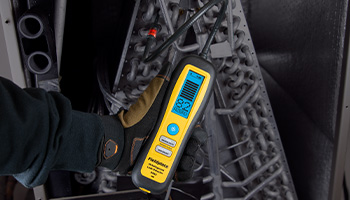
Fieldpiece offers two versatile, easy-to-use refrigerant leak detectors that find leaks as small as 0.03 oz/yr. The Fieldpiece DR58 Heated Diode Refrigerant Leak Detector detects all HFC, CFC, HCFC, HFO and blended refrigerants and offers superior sensitivity to R410A refrigerant. The Fieldpiece DR82 Infrared Refrigerant Leak Detector is also effective at finding all HFC, CFC, HCFC, HFO and blends, and it features a sensor life up to 10 years.


They both offer bright backlit LCD screens and feature four leak indicators including a flashing lighted tip, loud beeper, bar graph and numerical value. Plus, they’re designed to withstand all weather conditions and quickly recharge with any USB outlet.


Catch Leaks Early

When maintaining a system, finding leaks early is important, as it helps extend the life of the system and keep it running more efficiently and effectively. To ensure that leaks are found early, make sure the Fieldpiece DR58 – Heated Diode Refrigerant Leak Detector or the Fieldpiece DR82 Infrared Refrigerant Leak Detector are in your bag. You’ll have a powerful, tough, and sensitive ally on the jobsite.

Learn more about our leak detectors and all Fieldpiece products at www.fieldpiece.com

Categories
Press Releases

FIELDPIECE INSTRUMENTS AND SKILLSUSA ANNOUNCE 2024 #MASTEROFTHETRADE WINNERS, CELEBRATING THE PROGRAM’S THIRD SUCCESSFUL YEAR

Recipients Awarded $2,500 Each Toward HVACR Careers; Fieldpiece to Award Additional $10K at 2024 SkillsUSA National Leadership & Skills Conference

ORANGE, CALIF. (May 22, 2024)Fieldpiece Instruments, a leader in test instruments and tools for HVACR professionals for over 30 years, is proud to announce the winners of the third annual #MasteroftheTrade program. This year, six deserving students have been selected to receive $2,500 each to fund their continued education in the heating, ventilation, air conditioning and refrigeration (HVACR) trade or the option of an in-kind tool donation to jumpstart their careers.

Administered through SkillsUSA, the #MasteroftheTrade program aims to bridge the talent gap in the U.S. labor market for HVACR technicians by providing financial support to individuals pursuing a future in the industry. The winners of this program demonstrate exceptional skill, passion and dedication to their craft, embodying Fieldpiece’s spirit of excellence.

“We are thrilled to give back to our industry by awarding tuition or tools to these up-and-coming HVACR professionals,” said Tony Gonzalez, director of training at Fieldpiece Instruments. “There is a common thread of curiosity, problem-solving skills, understanding of craftmanship and desire to embrace challenges among the selected recipients that ensures a bright future in HVACR. Congratulations to this year’s winners!”

The six accomplished SkillsUSA students selected to receive the 2024 #MasteroftheTrade award are:

  • Cole Kelly from Billerica, MA
  • Colton Rentschler from Sinking Spring, PA
  • Cadin Blais from Watertown, SD
  • Mohamed Deyab from Harlingen, TX
  • Peyton Hoenig from Asheboro, NC
  • John Chaney from Knoxville, TN


ABOUT SKILLSUSA: SkillsUSA is a nonprofit partnership of education and industry founded in 1965 to strengthen the nation’s skilled workforce. Driven by employer demand, SkillsUSA helps students develop necessary personal and workplace skills along with technical skills grounded in academics. This SkillsUSA Framework empowers every student to succeed at work and in life while helping to close the skills gap in which millions of skilled trade positions go unfilled. Through SkillsUSA’s Championships program and curricula, employers have long ensured schools are teaching relevant skills, and with SkillsUSA’s new credentialing process, they can now assess how ready potential employees are for the job. SkillsUSA has nearly 400,000 members nationwide in high schools, colleges and middle schools, covering over 130 trade, technical and skilled service occupations. SkillsUSA is recognized by the U.S. departments of education and labor as integral to career and technical education. It has served nearly 14.2 million members since 1965. For more information, visit: www.skillsusa.org.


# # #

Categories
Blog

The Importance of Clean Oil in a Vacuum Pump

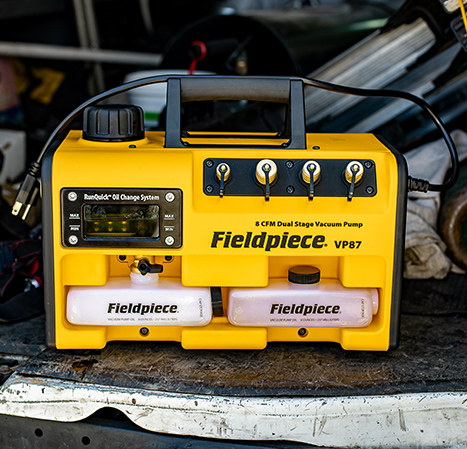
A vacuum pump is a powerhouse machine that removes air, gases, moisture, and contaminants from a system to create a clean environment for refrigerant. These efficient and powerful machines need clean oil to perform at their peak. When oil becomes cloudy or saturated, the pump won’t work as well, and pulling a deep vacuum takes longer.

Double-duty Oil

The oil in the vacuum pump acts as both a lubricant and as a sealant. It keeps the pump vanes (rotor blades) lubricated and helps keep a proper seal for an optimal vacuum. The deep vacuum that the pump creates helps push moisture and non-condensables from the system to the pump, ensuring the system is ready for refrigerant. This process contaminates the oil in your vacuum pump, which negatively impacts the pump’s performance and efficiency by compromising its internal seal. Pumps with contaminated oil will struggle to create a strong pressure differential, leading to increased evacuation time and eventual damage to the pump.

When to Change the Oil

The need to change your oil will depend on several factors. The most effective way to maximize performance and efficiency of your vacuum pump is to change the oil after each evacuation. In humid environments systems are more likely to contain moisture. Systems with more moisture and non-condensable contaminants present will contaminate your oil faster, requiring more frequent changes to maintain performance. Moisture contamination is easy to spot because the oil looks milky or cloudy. Other contaminants can sink to the bottom of your oil reservoir, so vacuum pumps with better reservoir visibility, such as the large window on the Fieldpiece vacuum pumps, allow for more accurate monitoring.

Another key indicator that it’s time for an oil change is pump efficiency. When pulling a vacuum, if the rate at which your microns are decreasing starts to level out, this could signal the need to change oil. When pump efficiency starts to wane, pulling a deep vacuum becomes more time-consuming. Note that the time to pull a vacuum will vary depending on the size of the system, atmospheric conditions such as humidity, and the efficiency of your evacuation setup.

Oil Changes on the Fly

Some pumps on the market allow the oil in the pump to be changed while it’s pulling a vacuum, like the RunQuick® oil change system on Fieldpiece vacuum pumps. Towards the end of the evacuation is when you need fresh oil the most, so oil changes on the fly are key to working faster and smarter.

Get a Vacuum Pump that Works for You

Since clean, dry oil is crucial for faster evacuations, consider vacuum pumps that make oil changes quick and hassle-free. Fieldpiece vacuum pumps are powerful, portable and offer oil changes on the fly, saving you time on every evacuation. See the entire line of pumps, oil and other HVAC tools built and designed for techs.

Categories
Blog

Three Tips for Your Next System Evacuation 

For refrigerant heating and cooling systems to work correctly and optimally, the refrigerant must be free of air, nitrogen, moisture, and contaminants. Therefore, before charging a system, it’s critical to evacuate the system with a vacuum pump to create a clean and sealed environment. Here are a few tips and best practices to make your next evacuation faster and more effective. 


Tip 1: Purge with Nitrogen 

Moisture in a system can drastically increase the time it takes to pull a vacuum and removing that moisture and other contaminants is a crucial step to saving time. To ensure that the system is free of excess oxygen, refrigerant, moisture, and other contaminants, purge it with nitrogen. This is different than flowing nitrogen or conducting a nitrogen pressure test. To purge, connect a nitrogen tank and flow nitrogen through the system at around 100 PSI. This allows nitrogen to flow into one side and then out the other. The movement displaces excess oxygen and air. It also removes any dangerous gases and ensures the system is dry. While performing this purge, be sure to keep the area well-ventilated. Nitrogen can displace oxygen and create a dangerous environment for techs or other occupants, so always keep this in mind. 


Tip 2: Triple Evacuate 

When working in humid environments or on systems with significantly more moisture, a triple evacuation is a great way to remove the moisture entirely. This is an industry requirement for some OEMs, and one of the most effective techniques for systems with high moisture content. Start by sealing the system off and pulling the system down to a vacuum of between 1000 and 2000 microns. Then, break the vacuum by introducing nitrogen for 5 minutes at 5 PSIG. Perform another evacuation to 500 microns, and then break it again with nitrogen for five minutes. Perform a third evacuation and pull the system down to between 200 and 300 microns. Let the system sit for 10 minutes, or longer for larger systems. Performing the triple evacuation purges with nitrogen helps the excess moisture and other contaminants vent out of the system. Not to mention, systems with less moisture allow for pulling a vacuum faster, saving you time on the job. 


Tip 3: Change Your Oil 

Within a system is not the only place where moisture can impede evacuation efficiency. High moisture content in your vacuum pump oil considerably reduces your pump’s ability to pull a deep vacuum quickly. Cloudy oil is a sign of moisture buildup, a natural occurrence in used oil. Vacuum pumps with clean, dry oil can maintain a higher pressure differential, speeding up the vacuum process and allowing for a deeper vacuum. This means more frequent oil changes directly improve your ability to evacuate systems quickly, once again saving you time on the job. With Fieldpiece vacuum pumps featuring the RunQuick® oil change system, you can change oil in seconds without losing vacuum.  

Effective tools are only part of an effective service. Staying informed and up to date on best practice is just as important, so we hope these tips help make your system evacuations easier, faster, and better!