Categories
Blog

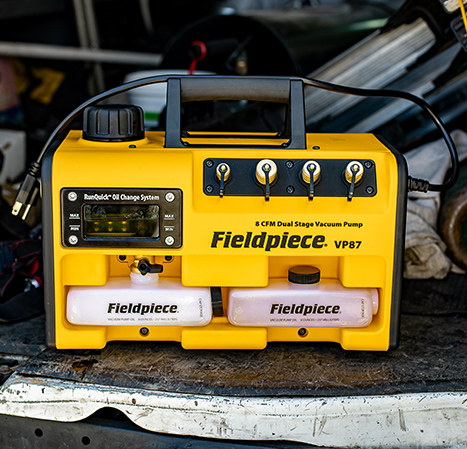
When You Should Consider Replacing Your HVAC Vacuum Pump

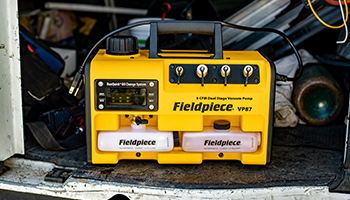
Proper care and maintenance are significant in improving the structural integrity of your HVAC vacuum pump and extending their lifespan. However, there will be a time when even the best HVAC vacuum pump will need replacement, no matter how much care and maintenance you give it. Here are reasons to consider for when you should replace your vacuum pump.
Low or Inconsistent Vacuum
The most important indication for the proper function of a HVAC vacuum pump is its ability to reach its specified final pressure, or ultimate vacuum. A vacuum pump with low suction power will be unable to do its job correctly. If your vacuum pump has low suction power, try changing the oil. If after changing the oil, the pump is still unable to reach its ultimate vacuum, then that may be an indicator the vacuum pump needs to be replaced.

Overheating Vacuum Pump
An HVAC vacuum pump should not regularly overheat. If your vacuum pump overheats when operating or constantly shuts down because of overheating, you should consider replacing it. Replacing the vacuum pump will prevent heat-related damage and save you money on costly repairs.

Old Vacuum Pump
While HVAC vacuum pumps can be very durable, they will not last a lifetime if used regularly. An older HVAC vacuum pump is less efficient and more prone to damage. Additionally, there have been many advancements in technology and innovation that apply to HVAC vacuum pumps. Newer vacuum pumps offer even more reliability and speed. They are built to cut back evacuation time allowing you to get your work done more quickly. Depending on the age of your vacuum pump you may want to replace it.

Categories
Blog

A Guide to Investing in Your Future as an HVACR Professional

A career path in HVACR is a rewarding experience, especially if you take the time to invest in yourself. Going through a postsecondary education; an apprenticeship to learn the ins and outs of the HVACR industry; or an employment opportunity that teaches you along the way is the first step toward success; but to get the most out of your career as an HVACR professional, you’ll want to take a few extra steps to enable a more fulfilling future.

Don’t Sell Yourself Short. Invest in Quality Tools.

Getting started as an HVACR technician can be an expensive undertaking as you quickly realize the person providing your HVACR tools (more often than not) is YOU. Yes, while there are some companies that provide tools or reimburse you for tool expenses, often you need to budget for your own tools. This is a big reason those starting off tend to lean toward purchasing inexpensive products in hopes of saving money.

The problem is they end up needing to purchase replacement tools more often than those that invest in quality the first time around. While finding the best bargain sounds like a good option when you are just getting started, the idea of tools breaking or not functioning properly may sound a little worse. Plus, you’ll want the bells and whistles soon. While just “the basics” may suffice on day-one of your career; in time, most technicians realize how much faster and more efficiently they can work with tools that do a bit more heavy lifting.

Purchasing durable HVACR tools that hold up to the test of time and withstand frequent drops and the rigors of field use, often means setting aside a slightly higher initial tool investment budget. Luckily student discount programs can help offset these costs.

And just because you’re new to the trade does not mean you need to buy “beginner” tools. It’s best to buy quality tools that provide assurance on the job and serve you well for the long haul versus purchasing more inexpensive, poorer quality tools that cost you more in the long run.

With this in mind, prioritize the tools you know you are going to use often, and whenever possible, purchase them through HVACR tool company program discounts. Consider this an investment in yourself.

Invest in Your Knowledge and Skillset.

Your initial education teaches you the basics of how to install, repair, maintain and troubleshoot systems whether in the commercial, residential or refrigeration space, but you’ll also learn something new on the job every day.

The very best HVACR professionals, or #MastersoftheTrade are always working to understand new technologies, tools and methods for completing a job. That’s why continuing education programs that enhance your HVACR knowledge and skillset— many of which are available free and online and offer NATE credits – can help you stay ahead of the HVACR curve.

If you find yourself with spare time while waiting for measurements or between jobs, take advantage of programs that serve to bolster your knowledge. And of course, always keep in mind the quality of your tools. Never question an investment in you – whether it is a matter of time or money, you and your future are worth it. Every HVACR professional deserves the best – even when they’re just getting started.

Visit fieldpiece.com/hvacrstudentresources today to learn more.


Categories
Videos

Introducing an all-new Job Link® System App

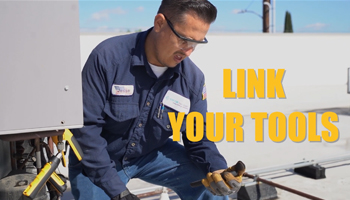
The newly enhanced Job Link® System App is completely refreshed with a new design, improved functionality and even more of the features you need. The simpler and more seamless user-interface is designed for the way HVACR pros work – linking you to both your tools and to your jobs.

Categories
Blog

When Servicing a Heat Pump, Don’t Overlook the Reversing Valve

Heat pumps are a different animal from furnaces and have some uniquely different parts. If you’re servicing or repairing one that is underperforming, don’t overlook the reversing valve when doing your diagnostic checks.

HVACR Reversing Valve
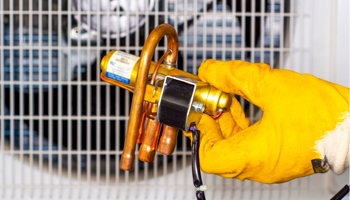
One of the most critical components in a heat pump is the reversing valve. This valve allows the heat pump to switch from heating the air to cooling the air. It does this by reversing the refrigerant flow in the system. So, instead of removing heat from the air like an air conditioner, it adds heat.

When this valve malfunctions, the system won’t heat or cool efficiently, but symptoms don’t always point to the reversing valve. It’s easy to confuse defective reversing valves with faulty heating and cooling processes. That’s because the symptoms of inefficient heating and cooling are essentially the same.

Stuck Valves
If the system won’t switch from heating to cooling, your problem could be a stuck valve. If the valve is stuck, tapping on the body of the valve with a plastic tool may free it. Don’t bang on it with a hammer as that may bend or break some of the sensitive internal pieces. A plastic tool is all you need. you should also check and clean the capillaries for obstructions. This may free the valve. Look for dents on the valve that may have caused an obstruction inside and check to see if it has scorch marks that could be caused by overheating. If, after examining these components, you still do not free the valve, the system may have an electrical problem.

Electrical Issues
The solenoid in the reversing valve energizes to switch the heat pump from heating to cooling. If the solenoid is defective, it could turn-off mid-operation and not fully open or close. Use your voltmeter to see if the valve is energized and magnetized. If it isn’t, your problem could be a disconnected wire or a faulty solenoid. If everything is working fine electronically but you still aren’t heating or cooling effectively, you could have a leak inside the reversing valve.

Leaking Valves
Before you check to see if you have a leak inside your reversing valve, ensure that your system has the proper refrigerant charge. Overcharged or undercharged systems could cause the reversing valve to malfunction. If your reversing valve has a leak inside, it’s splitting the refrigerant from the hot to the cool side. To check this in the heating mode, compare the temperatures of the suction line from the outside to the suction valve at the bottom. If the difference is more than 3°F, the valve needs to be changed. In cooling mode, check both reversing lines the same way you did for heating mode. A difference higher than 3°F means the valve should be replaced.


Categories
Blog

Our New Job Link® System App Just Got Better

As technology continues to improve and innovate, we at Fieldpiece Instruments want to do the same. We have designed a wireless app that now allows HVACR technicians to work smarter, not harder. Using our updated Job Link® System App, technicians can remove another layer of human error from their services. This makes their work that much more reliable and will help them find more and more customers. We are very excited about this new wireless app and hope that more technicians start to use it. Continue reading to learn more about what the app does and how it will help you during your next service.  


This newly designed wireless app features a simpler and more seamless interface that improves the experience for the HVACR tech in the field. We rebuilt the app to work the way the pros do to help them view measurements, link multiple tools and track jobs and orders. Every part of the app’s user experience has been improved to link your tools, and now, your jobs. Here are some of the features included with Job Link: 


One-time connectivity 

The new app helps integrate all Job Link wireless tools seamlessly with just a few clicks. Now, tools are easier to connect to, easier to manage and offer an easier way to work. 


One place to look 

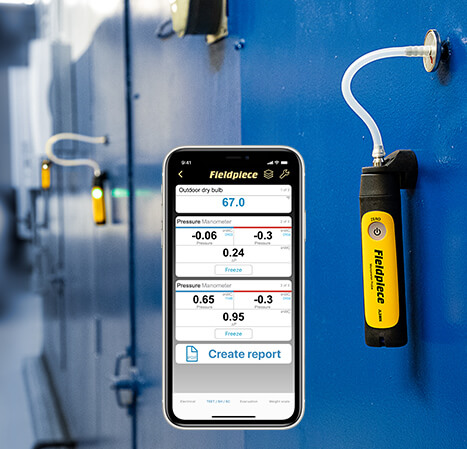
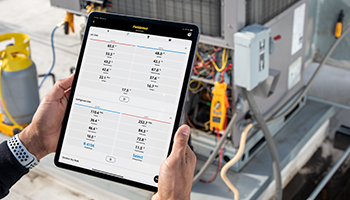
In the spirit of making the wireless app easier to use, we’ve collected all of the important data that techs need on a single screen. From this one view on their device, they’ll be able to see every measurement from each connected tool.  


One-stop-shop 

The new Job Link System App also allows techs to search, sort and manage jobs by customer, job and location. This helps them collect, store and access customer data to work the way they want to. We also improved invoicing to create and send custom invoices more easily than ever — even from the job site. 


One pin per job 

Additionally, our new geolocation tagging feature lets techs virtually drop a geolocation pin on equipment that they serviced to add system details to each customer’s file. Whenever they’re back at that location, they can instantly access previous service calls, data and measurements without taking time to look up an old invoice or a client name. 


One app does it all 

Our new Job Link System App connects even more easily to tools, jobs, clients and even equipment. Every tech that has the Job Link System App in their pocket works better, faster and smarter. Of course, Fieldpiece would keep techs top-of-mind. 


One place to learn more 

If you’re interested in learning more about the features of the updated Job Link System App, visit the new Job Link System page. 

Categories
Blog

Never Stop Enhancing Your HVACR Technician Skills

Here at Fieldpiece, we believe that professional development is essential in any line of work, but it’s especially important as an HVACR technician. Even if you are an experienced technician, it’s still necessary for you to learn the new technology that seems to come out every other month.

We are committed to helping you improve your HVACR technician skills by teaching you new techniques. We also want to help you in learning how to run an HVACR service company. We can provide you with new equipment that makes the job easier and professional advice for handling that equipment safely and correctly.

But don’t just take our word for it, here are three additional reasons why continuing to improve your HVACR technician skills matters.


Earn a Higher Salary.

While the average salary for an HVACR tech is $50,590, according to the U.S. Bureau of Labor Statistics, HVACR techs with years of experience in addition to certifications can make much more. Although certifications are not mandatory, earning NATE credits through free training programs allows you to stay competitive in the industry and gives you the benefits of receiving a salary on the higher end of the scale. What’s more, those with extra certifications under their belt engender a sense of security and build deeper trust with clients as techs who are going above and beyond the basic trainings are perceived as more committed to their field.

Keep Up with Evolving Technologies. 

Technology has made drastic changes in everything we know. That includes the HVACR industry – from systems to tools. In the mid-1840s, the first ice-making machine was invented by Dr. John Gorrie. Today, new compression technologies that do not require refrigerants are being talked about.

It is because of this evolution in technology that HVACR professionals should always look to continue enhancing their skills and knowledge. Whether learning about the latest best practices for refrigerant recovery or how to pull a faster system evacuation, there is always something new to learn. Plus, with so many new tools on the market, it’s always valuable to understand the myriad ways advanced tools can help get jobs done easier, faster and better—ultimately saving time and money.

Be a Trusted HVACR Professional.

Getting additional credits and certifications takes extra time and dedication as you do need to carve out time from your busy schedule to take courses and tests, ensuring you are building out your skills even further. Being a certified HVACR professional has many benefits, including having increased credibility. When techs are certified, because of their extra training and increased technical knowledge, they are generally perceived as higher value and thought of as a professional that will get the job done right the first time around.

The benefits to becoming a certified HVACR professional are endless. With emerging technologies come groundbreaking HVACR tools and complicated HVACR systems that pros need to stay on top of. What better way to do this than to continue enhancing your knowledge and skillset?

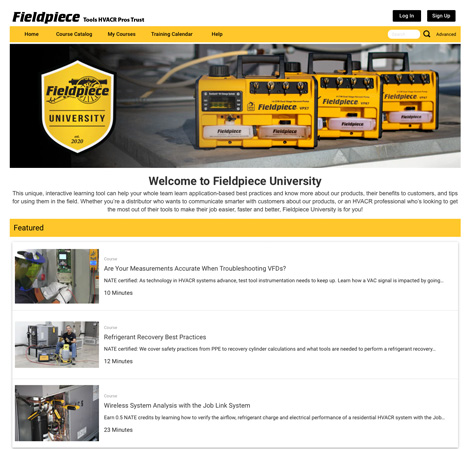
Courses offered by Fieldpiece University (FPU) not only teach you new skills, but also offer details about tools, their benefits and tips for using them in the field. Plus, Fieldpiece University courses are quick and can easily be accessed online! Perhaps most importantly, Fieldpiece University helps you achieve your goals of a higher salary thanks to NATE credits; and keeping up with evolving technologies ensures you remain a master of your trade.

To learn more about how you can enhance your HVACR technician skills and earn NATE credits, visit https://www.fieldpiece.com/fieldpiece-university/.