














Categories
Blog

What is a Carbon Monoxide Detector?

In the HVAC industry, professionals are not just problem solvers; they’re protectors. From routine maintenance to new installs, technicians play a vital role in ensuring that heating systems and gas appliances don’t just perform well but operate safely. That’s where CO detectors come in.

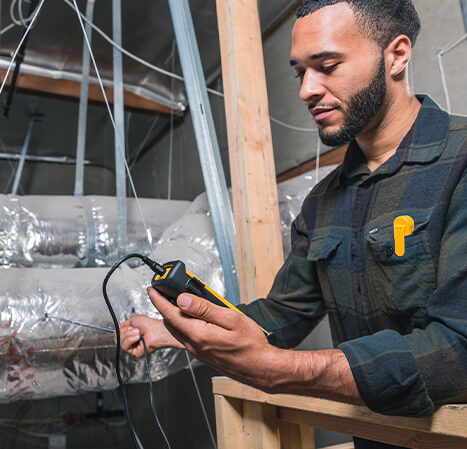
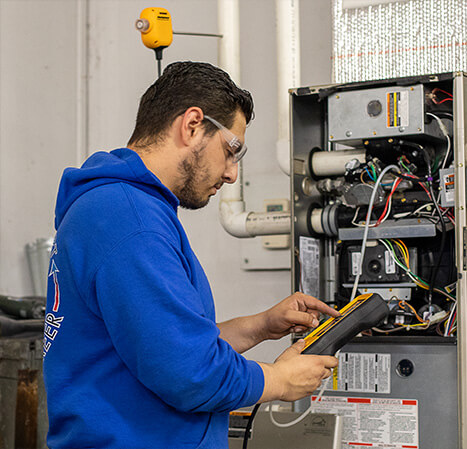
Whether it’s a compact sensor clipped to your tool belt or a powerful meter used during a furnace inspection, carbon monoxide detectors are essential safety tools. They help HVAC pros detect leaks, diagnose issues, and provide peace of mind to homeowners, business owners, and HVAC professionals alike.

In this post, we’ll break down what carbon monoxide is, how detectors work, and why the right tool can make all the difference in your service calls.
 

What Is Carbon Monoxide (CO)?

Carbon monoxide (CO) is a colorless, odorless, and tasteless gas that can be extremely dangerous in any concentration. It’s produced when fuels like gas, oil, wood, or charcoal burn incompletely. Furnaces, boilers, water heaters, fireplaces, and other appliances are all potential sources of CO if not properly ventilated or maintained.

Because CO is virtually undetectable by human senses, the only reliable way to know if it’s present is with a carbon monoxide detector.
 

What Does a Carbon Monoxide Detector Do?

A carbon monoxide detector is a device designed to sense and alert when CO is present in the air. There are two main types of CO detectors:
 
Dwelling CO Detectors: Found in most occupied spaces, these are usually plug-in or battery-powered and designed to sound an alarm when CO is detected.
 
Professional CO Detectors: These portable tools are used by HVAC technicians to measure precise CO levels during system diagnostics, inspections, and maintenance calls.
 
Whether mounted on a wall or carried in a technician’s toolkit, these detectors are critical for identifying leaks and CO accumulation, as well as ensuring appliance efficiency and safety, protecting lives.
 

Why Technicians Rely on CO Detectors

For HVAC professionals, a reliable CO detector is a must-have. It helps you:

  • Test appliances like furnaces, boilers, and water heaters for combustion efficiency and safe operation.
  • Diagnose venting issues and blocked flues.
  • Ensure compliance with local codes and safety standards.
  • Protect customers and build trust by showing that safety is your top priority.

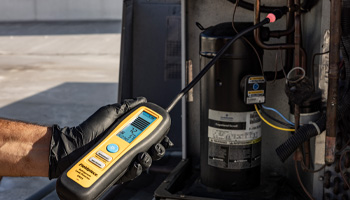
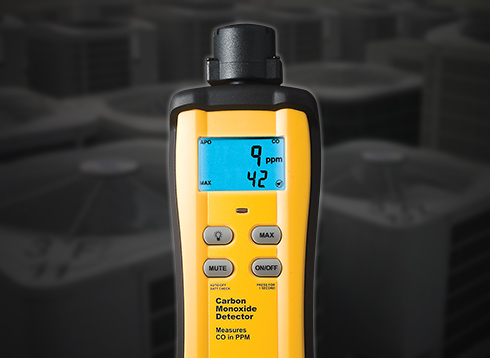
Fieldpiece CO detectors like the SCM4 are designed for fast, accurate readings in real-world environments. We offer CO detectors that have electrochemical sensors fast enough for walk-around tests, making them convenient as well as efficient. They can easily go hands-free, with magnetic hangers, and recalibrate with a quick press of the ZERO button. With detail-oriented construction, intuitive design, and precise sensors, they give technicians the information they need to keep homes, buildings, and their inhabitants safe.
 

Conclusion

A carbon monoxide detector is more than just a tool; it’s a vital line of defense against a silent, potentially deadly threat. Whether you’re a dwelling owner or inhabitant installing detectors for peace of mind or an HVAC pro testing for CO leaks in the field, choosing the right CO detector is essential.

At Fieldpiece, we build CO detectors you can count on, because when safety is on the line, accuracy and reliability matter most.
Categories
Blog

What is a Refrigerant Recovery Machine?

In the HVACR industry, proper refrigerant management is crucial for both environmental protection and system efficiency. One essential tool in this process is the refrigerant recovery machine. A refrigerant recovery machine ensures compliance with environmental regulations while maintaining system performance. But what exactly is a refrigerant recovery machine, and how does it work? Let’s explore its function, importance, and key considerations when choosing the right one.
 

Understanding Refrigerant Recovery Machines

A refrigerant recovery machine is a specialized device designed to remove refrigerants from HVACR systems such as air conditioners, refrigerators, and commercial HVACR units. This process is necessary to prevent the release of harmful refrigerants into the atmosphere, as many of these substances contribute to ozone depletion and global warming, in addition to the financial benefit of reclaiming valuable refrigerant for future use.

These machines operate by safely extracting the refrigerant from the system and storing it in a designated recovery cylinder. The recovered refrigerant can then be recycled, reclaimed, or properly disposed of, depending on its condition and applicable regulations.
 

How Does a Refrigerant Recovery Machine Work?

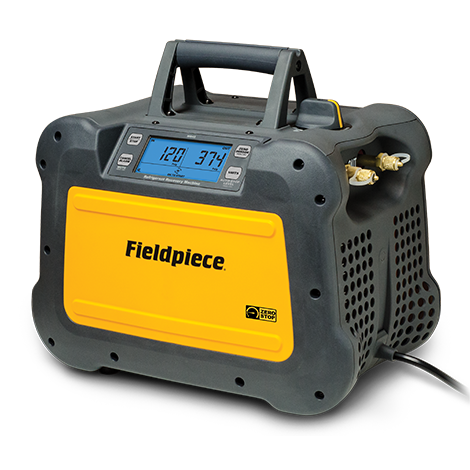
Refrigerant recovery machines function by using a series of components that enable the safe and efficient removal of refrigerant. The process typically involves three main steps. Step one is refrigerant extraction: the machine connects to the HVACR system via service or vacuum hoses, creating a closed-loop system. It then pulls refrigerant from the system through the recovery machine. Next is the compression and cooling stage. Inside the machine, the refrigerant is compressed and cooled to transition it from a gas to a liquid or maintain its gaseous state, depending on the recovery method used. The speed of the recovery process can vary depending on the state of the refrigerant, so recovery machines such as the Fieldpiece MR45 that can vary speed based on refrigerant state can significantly increase the speed of the recovery process.  Finally, the refrigerant is transferred to a certified recovery tank, preventing its release into the environment. It can later be processed for reuse or disposal according to industry standards.
 

Types of Refrigerant Recovery Methods

There are three primary methods of refrigerant recovery, each with its advantages and specific applications:
 
Liquid Recovery: This method involves removing refrigerant in its liquid state, typically the fastest process
 
Vapor Recovery: This method involves extracting refrigerant in its vapor form
 
Push-Pull Recovery: This technique utilizes both the liquid and vapor ports of a recovery cylinder to increase recovery speeds on large systems. A loop is made between the cylinder, recovery machine, and system, which when active pushes liquid from the system into the cylinder. This pushed vapor out of the cylinder, through the recovery machine, and back into the system, increasing system pressure and output of liquid refrigerant to the cylinder. Note, this is not as common or effective with residential or smaller systems. 
 

Why Are Refrigerant Recovery Machines Important?

Environmental Protection
Refrigerants such as R-22 and hydrofluorocarbons (HFCs) have been linked to ozone depletion and global warming. By using a recovery machine, HVACR professionals significantly reduce the release of harmful gases, ensuring compliance with the Clean Air Act and EPA Section 608 regulations. Additionally, recovery machines that halt the recovery process at 0inHg can offer further protection by preventing the introduction of air into the system and recovery cylinders in systems where leaks are present. 
 
Regulatory Compliance
Governments and regulatory agencies require HVACR technicians to recover refrigerants during system repairs or decommissioning. Failing to comply can lead to heavy fines and legal consequences.
 
Cost Efficiency
Reclaimed refrigerants can be cleaned and reused, reducing the need to purchase new refrigerants. With the rising cost of refrigerants due to phase-outs of older substances, as well as common shortages of high-demand refrigerants, recovery and reuse provide significant cost savings to the technician and contractor.
 
System Longevity and Performance
Proper refrigerant recovery prevents contamination and moisture from entering HVACR systems, which helps maintain their efficiency and longevity, reducing callbacks and equipment breakdown, and increasing customer satisfaction.
 

Choosing the Right Refrigerant Recovery Machine

When choosing the right refrigerant recovery machine, there are several details to keep in mind. Look for a machine with high recovery rates, especially if you handle large systems. Faster recovery times improve efficiency and reduce downtime. A compact, lightweight, and rugged design ensures easy transport and durability, especially for field technicians who move between job sites frequently. Ensure that the machine supports the refrigerants you commonly work with, including newer low-global-warming-potential (GWP) refrigerants. Features such as overheat protection, high-pressure shut-off, and filter systems enhance safety and machine longevity. User-friendly controls, clear display screens, and automatic functions make refrigerant recovery machines easier to operate and reduce the likelihood of errors, and smart functions that halt recovery to prevent the introduction of air into systems and cylinders further increase recovery effectiveness.
 

Conclusion

A refrigerant recovery machine is an indispensable tool for HVACR professionals, ensuring environmental safety, regulatory compliance, and cost-effective refrigerant management. As regulations continue to evolve and refrigerants transition to more environmentally friendly alternatives, having a reliable refrigerant recovery machine will remain a necessity for any HVACR technician or company dedicated to responsible refrigerant handling. Further questions? Looking for the right refrigerant recovery machine for you? Read more about the Fieldpiece MR45 today and increase your recovery speed and effectiveness.

Categories
Blog

What is a Leak Detector?

One of the most common issues that can compromise an HVAC system’s performance is refrigerant leaks. These leaks can lead to reduced cooling capacity, increased energy costs, and even environmental damage. That’s where a leak detector comes in. But what exactly is a leak detector, and how does it work? Let’s dive into the details.
 

Understanding Leak Detectors

A leak detector is a specialized tool designed to identify and locate refrigerant leaks in HVACR systems. These devices are crucial for HVACR technicians who need to ensure that refrigeration and air conditioning systems are tight and functioning efficiently and safely. Leak detectors help pinpoint leaks in refrigerant lines, coils, and other system components, allowing for quick repairs and minimal downtime.

Leak detectors come in various types, each using different methods to detect refrigerant leaks. Understanding these types can help technicians choose the right tool for the job.
 

Types of Leak Detectors

There are several types of leak detectors available on the market, each with unique advantages. Here are the most common ones:
 
Electronic Leak Detectors
Electronic leak detectors are among the most popular tools used by HVAC professionals. These devices use sensors to detect the presence of refrigerant in the air. Some of the most popular models, like those manufactured by Fieldpiece, are equipped with heated diode or infrared sensors that provide accurate and reliable leak detection. Contrary to common misconception, both leak detector types below are compatible with A2L refrigerants, unless otherwise stated by the manufacturer. 

  • Heated Diode Detectors: These detect refrigerant by breaking down its molecules and measuring the resulting ionized particles. They are highly sensitive and can detect even the smallest leaks.
  • Infrared Detectors: These use infrared light to detect changes in refrigerant concentration. They are known for their durability and long sensor life, making them a cost-effective and preferred choice for professionals.

Ultrasonic Leak Detectors
Ultrasonic detectors work by picking up high-frequency sounds produced by escaping refrigerant. These devices can detect leaks without directly coming into contact with the refrigerant, making them useful in hard-to-reach areas. However, they require a quiet environment for accurate detection.
 
Bubble Solution Leak Detectors
A more traditional method, bubble solution detectors, involves applying a soap-like solution to suspected leak points. If a leak is present, bubbles will form at the site of the escaping refrigerant. While this method is inexpensive and simple, it is not as quick or effective for detecting very small leaks.
 
Fluorescent Dye Leak Detectors
This method involves injecting a special fluorescent dye into the HVAC system. If there is a leak, the dye escapes and becomes visible under UV light. This technique is particularly useful for detecting leaks that are difficult to pinpoint with other methods, and most effective in detecting liquid or oil leaks.
 

Why Leak Detection is Important

Detecting and repairing refrigerant leaks is essential for energy efficiency, system longevity, environmental protection, and regulatory compliance. Leaks frequently lead to oil loss and a decrease in oil velocity, which in turn decreases system efficiency and increases energy costs and system wear. Early detection can prevent costly damage, while minimizing refrigerant emissions helps protect the environment. Additionally, compliance with regulations ensures responsible handling and reduces harmful impacts. 
 

Choosing the Right Leak Detector

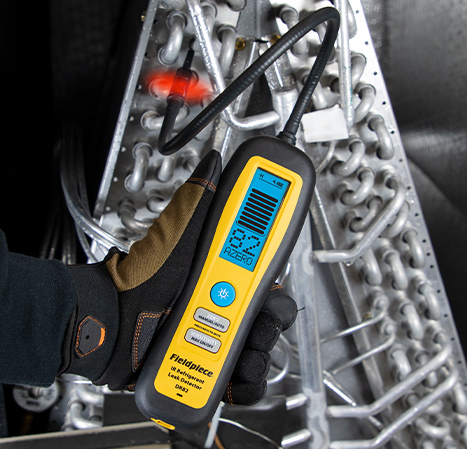
Selecting the right leak detector depends on various factors, including the type of refrigerant being used, the environment in which the tool will be used, and the sensitivity required. It is important to ensure that the leak detector is compatible with the target system’s refrigerant type as well, as detection capability and refrigerant compatibility will range across detection types and manufacturers. For example, Fieldpiece offers the DR58 Heated Diode and DR82 Infrared Leak Detectors, which are both compatible with A2L systems. These tools are designed with HVAC professionals in mind, ensuring reliable performance in the field.

When choosing a leak detector, there are several details to consider. Some leak detectors and leak detector settings are more sensitive than others, sensing leaks as small as 0.1 ounces per year, providing exceptional precision. Lifespan is also key, as long-lasting sensors reduce maintenance costs and ensure consistent performance. Also, look for rugged, field-ready designs and user-friendly interfaces, ergonomic designs, and features like automatic calibration that make leak detection more efficient.
 

Best Practices for Leak Detection

To maximize the effectiveness of a leak detector, HVAC professionals should follow key best practices: conduct regular inspections to prevent system failures, confirm refrigerant compatibility according to manufacturer specifications, use the appropriate detector for accurate results, adhere to manufacturer guidelines for optimal performance, confirm leaks with a secondary method before repairs, and document findings for compliance and maintenance planning.
 

Conclusion

A leak detector is an essential tool for HVAC technicians, helping to ensure system efficiency, compliance, and environmental responsibility. Whether using electronic, ultrasonic, bubble solution, or fluorescent dye detectors, professionals rely on these tools to keep HVAC systems running smoothly. Fieldpiece offers some of the most rugged and reliable leak detectors in the industry, providing HVAC professionals with the confidence they need to perform their jobs effectively. Contact us today!

Categories
Blog

HVACR Tech Tip: Why Accurate Refrigerant Charge Matters

Getting the refrigerant charge right isn’t just good practice — it’s essential. From system performance to energy efficiency and long-term reliability, charge accuracy is crucial. Whether you’re servicing air conditioning units running on R-32 or handling a refrigeration system using R-134a, the rule is the same: the system charge needs to be accurate.

A properly charged system:

  • Runs more efficiently
  • Maintains stable temperature control
  • Protects the compressor from unnecessary wear

But an incorrect charge – whether too little or too much – can lead to poor system performance, excessive wear and even premature failure.


Undercharging: A Slow Burn Toward System Failure

Undercharging an HVACR system does not just impact the performance of your system—it will also actively damage the system’s components and ultimately lead to costly failures. When a system is undercharged, it lacks the proper volume of refrigerant needed to absorb and move heat efficiently. This will result in poor cooling or heating performance as the evaporator cannot reach the temperature required to facilitate the needed heat transfer.

Undercharging can also place significant stress on the compressor. With an insufficient amount of refrigerant returning to the compressor, the pressure on the suction side will drop. This can cause the compressor to operate at higher temperatures, increasing the risk of the compressor overheating. One of the more dangerous outcomes of an undercharged system is the freezing of the evaporator coil. As the pressure and temperature drop too low, moisture condenses and freezes on the coil, eventually blocking airflow. Once airflow gets restricted, pressure starts to build up, and the compressor has to work much harder, pushing the whole system further away from the operating range.


Why Overcharging Can Lead to Liquid Slugging and Total Compressor Failure

On the other hand, overcharging a system can be just as damaging and comes with its own set of problems. With too much refrigerant in the system, pressures throughout the circuit rise. This elevated pressure forces the compressor to work harder than necessary, increasing energy consumption and reducing overall system efficiency. Over time, the strain can lead to compressor overheating, damaged valves, or even mechanical failure. Unlike undercharging, which often presents slowly over time, overcharging can sometimes lead to immediate shutdowns if high-pressure safety controls are triggered.

A particularly harmful result of overcharging is liquid refrigerant making its way back to the compressor — a phenomenon known as liquid slugging. Compressors are designed to compress gas, not liquid, and when liquid enters the compressor it can cause internal components to break. This kind of failure is catastrophic and typically leads to total compressor replacement.


Get the Charge Right – Every Time

How do you make sure the refrigerant charge is accurate? The best practice is to follow the equipment manufacturer’s installation and service manuals. Depending on the system type and metering device, refrigerant charge is set by superheat, subcooling or by refrigerant weight. Plus, you will need to take into account the airflow at the indoor unit.

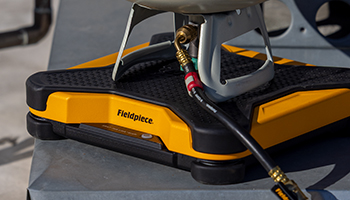
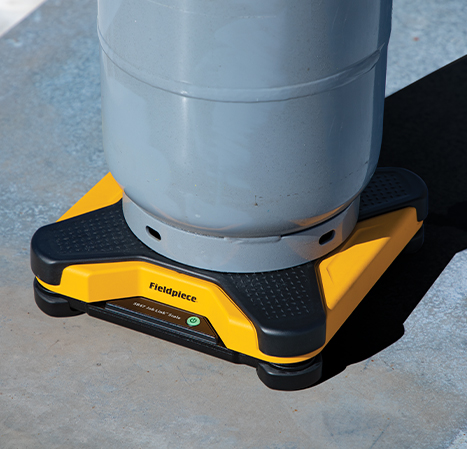
Whether the system uses R-134a, R-410A or any other refrigerant, the core principle remains the same: the charge must be precise. Even a slight deviation can throw the system out of balance, compromise performance and reduce the system’s life span. Get the job done right by using field-tested tools like the Fieldpiece JL3KH6 Job Link®  charge and air kit and the SR47 digital refrigerant scale.

Accurate charging doesn’t just help systems perform better – it saves your customers money and helps prevent call backs.

Categories
Press Releases

Fieldpiece Launches New DRX3 Refrigerant & Combustible Gas Leak Detector

All-in-one Tool Helps HVACR Technicians Find Leaks Fast on Cooling, Refrigeration and Heating Systems

Orange, Calif. (July 7, 2025) – Fieldpiece Instruments, a leading manufacturer of tools and test instruments for HVACR professionals, is proud to announce the launch of the DRX3 Refrigerant and Combustible Gas Leak Detector. The rugged, high-performance tool quickly and accurately detects a wide range of refrigerants and heating gases, including A1, A2L and A3 refrigerants and blends, tracer gas, natural gas and propane – all with one tool and one sensor. The versatility of the DRX3 means technicians travel lighter with only one tool, to find leaks fast on cooling, refrigeration and heating systems.

“The DRX3 is an exciting addition to our lineup of leak detectors,” said Craig Rodriguez, vice president of commercial at Fieldpiece Instruments. “Whether a technician is working on flammable A3 refrigerant systems where safety compliance is critical, or they need one reliable tool that handles both refrigerant and combustible gas leaks year-round, the DRX3 delivers. At Fieldpiece, we’re committed to putting the right tool in the hands of every tech.”

As refrigerant regulations continue to evolve, choosing a forward-compatible leak detector like the DRX3 is a smart, future-ready investment. It’s compliant for use in hazardous environments, meeting ATEX Zone 2 and Class I, Division 2 requirements, providing confidence around mildly-flammable and flammable refrigerants.

The DRX3 features multiple feedback indicators that change with leak intensity to help locate the source of the leak, including:

  • Flashing LED at probe tip
  • Loud audible beeps
  • Graphic and numeric on-screen display
  • Real-time in the Job Link® System App

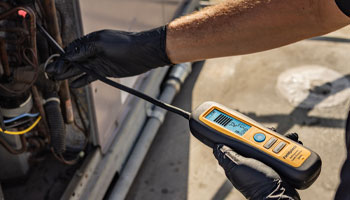
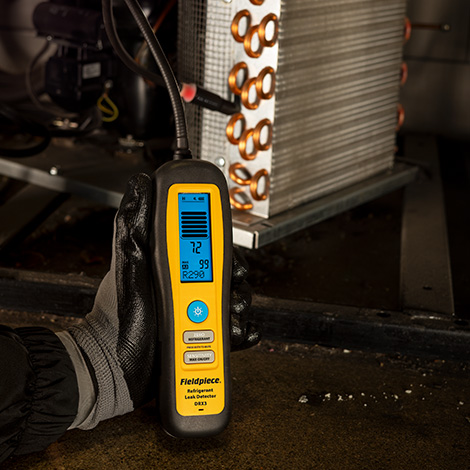
A field-replaceable, fast-response, heated diode sensor handles virtually every leak scenario encountered. The DRX3 flexible wand helps you reach tough spots around evaporator coils, compressor cabinets, and complex line sets. Additionally, field-replaceable, long-life batteries ensure the DRX3 stays powered up without constant recharging.

With Job Link® System App compatibility, HVACR technicians can capture leak data and create job reports for recordkeeping, and to share results instantly with their team or customers. This connected workflow helps reduce callbacks, streamline service calls, and provide a professional level of transparency to your customers.

The DRX3 All-in-One Leak Detector is available now through authorized Fieldpiece distributors. For more information, visit www.fieldpiece.com or contact your local Fieldpiece representative. Watch the DRX3 video to learn more.

ABOUT FIELDPIECE: It delivers on this promise through industry-leading devices and a broad range of professional-grade tools and technology inspired by real-world application and field use. Fieldpiece is focused on serving the HVACR industry exclusively, enabling HVACR professionals to become masters of the trade. Discover more at www.fieldpiece.com, and follow Fieldpiece on Facebook, Instagram, YouTube, X and LinkedIn.

Categories
Blog

One Tool for Every Leak: DRX3 All-in-One Leak Detector

In the HVACR world, no job is complete until you’re sure the system is leak-free. Whether you’re chasing down leaks in a pre-charged line set, servicing a rooftop unit, or working on a complex refrigeration system, your leak detector needs to be fast, accurate, and built for real-world conditions. That’s exactly what the new Fieldpiece DRX3 All-in-One Leak Detector delivers.

The DRX3 simplifies leak detection like never before. It combines heated diode technology, wide refrigerant and combustible gas compatibility, and rugged portability into one powerful tool, helping HVACR pros save time, travel lighter, and stay safe—no matter what kind of refrigerant or gas they’re working with.

Let’s take a closer look at why DRX3 is a must-have for service calls, installs, and everything in between.


Built for Today’s Refrigerants — And Tomorrow’s 

With refrigerant regulations evolving and new blends entering the market, technicians face a growing list of refrigerants and gases they need to detect. The DRX3 is built to handle the full range:

  • HC, HC, HCFC, CFC, HFO, H2/N2 tracer gas, and blend refrigerants, as well as
  • Natural gas, propane, butane, and methane combustible gases.

This means one sensor handles virtually every leak scenario you encounter, there’s no need to swap detectors depending on the job.

Whether you’re working with common A3, A2L, A1 refrigerants or heating fuels, the DRX3’s heated diode sensor delivers fast, reliable detection across the board. The sensor is easy to replace in the field after its typical 300-hour life, keeping your downtime to a minimum.


Speed + Accuracy = Less Time on the Job

The DRX3 was designed with real-world HVACR work in mind: tight spaces, hard-to-reach joints, and time-sensitive calls. That’s where its advanced feedback system shines. The DRX3 gives you multiple ways to spot leaks quickly and confidently:

  • Flashing LED tip for immediate visual cues
  • Loud audible beeps that change with leak intensity
  • Graphical and numerical display showing relative leak levels at a glance
  • Live leak data in the Job Link® System App for remote monitoring and easy documentation

With high, medium, and low sensitivity settings plus both auto and manual zeroing, you can fine-tune the detector depending on your environment—whether you’re in a drafty mechanical room or a tight equipment closet.


One Tool That Travels Light 

Every technician knows: lighter is better. The DRX3 was built to consolidate your toolbag. Instead of carrying multiple detectors for different refrigerants or gases, one DRX3 does it all. Its rugged, compact design holds up to daily wear and tear.

The flexible wand helps you reach tough spots around evaporator coils, compressor cabinets, and complex line sets. Meanwhile, field-replaceable, long-life batteries ensure the DRX3 stays powered up when you need it most—without constant recharging or replacing.


Safety Compliance 

Working with A2L and A3 refrigerants introduces new safety requirements due to flammability risks. The DRX3 is compatible for use in hazardous environments, complying with the requirements of:

  • ATEX Zone 2
  • Class I, Division 2

These safety standards give you confidence that your leak detector has been tested for use around mildly flammable and flammable refrigerants and gases, meeting industry safety standards while helping you stay compliant.


Connected with Job Link® for Easy Reporting 

Leak detection doesn’t end when you find the problem—you still need to document it. That’s where the DRX3’s Job Link® System App compatibility takes things to the next level.

By pairing your DRX3 with the Job Link® app, you can:

  • Monitor leaks in real time on your phone or tablet
  • Capture leak data for customer reports
  • Create clear documentation for compliance and recordkeeping
  • Share results instantly with your team or customers

This connected workflow helps reduce callbacks, streamline service calls, and provide a professional level of transparency to your customers.


The Bottom Line

The DRX3 is more than just another leak detector, it’s your all-in-one solution for handling today’s wide variety of refrigerants and gases; while delivering the speed, safety, and accuracy you expect from Fieldpiece.

With its heated diode sensor, multiple feedback indicators, hazardous location compliance, and Job Link® connectivity, the DRX3 helps HVACR professionals tackle service calls and installs with confidence. Whether you’re upgrading your current tool or building your ultimate leak detection kit, the DRX3 belongs in your bag.