












Categories
Blog

What is an Electrical Meter?

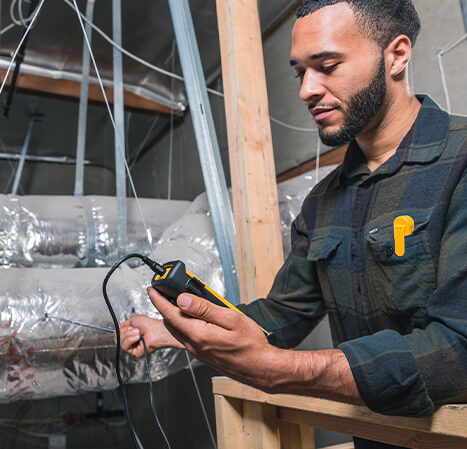
Behind every hum of a compressor or flicker of a control board, accurate electrical measurements reveal how effectively an electrical load or circuit is performing on an HVAC system. That’s where an electrical meter steps in. When designed for HVAC professionals, it is a window into a system’s electrical performance, helping technicians see exactly how power moves, where faults occur, and how to restore peak efficiency with confidence. 

Understanding the Basics: What an Electrical Meter Does

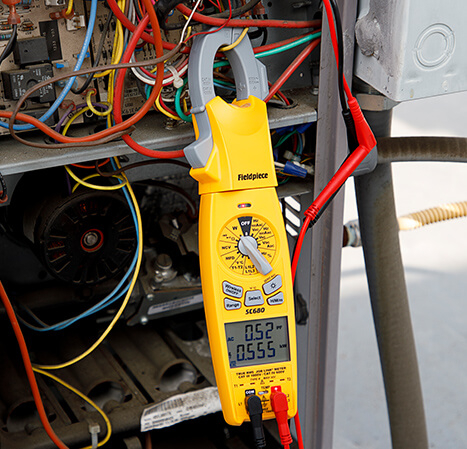
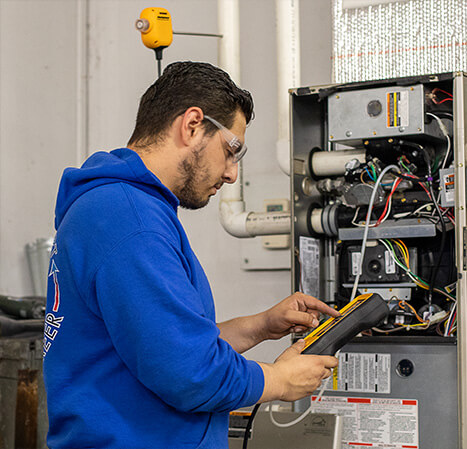
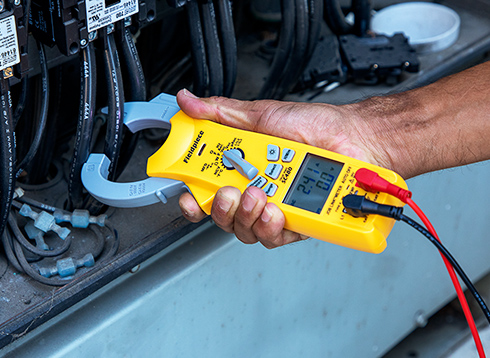
An electrical meter, sometimes called a multimeter, clamp meter, or voltmeter, is a handheld device used to measure the electrical properties of a circuit. In HVAC work, these measurements are crucial for verifying that motors, compressors, thermostats, and control boards are operating correctly.

An electrical meter measures several key properties that reveal how well an HVAC system’s electrical components are performing. It reads voltage (volts AC/DC) to ensure proper power delivery and detect voltage drops, measures current (amps) to confirm that motors and compressors are drawing the correct amount of power, and tests resistance (ohms) to identify breaks or weaknesses in wiring and components. In addition, it checks continuity to verify complete circuits and quickly detect short or open connections—all critical insights that help technicians diagnose issues accurately and maintain system reliability.

Why Electrical Meters Matter in HVAC

HVAC systems combine electrical, mechanical, and refrigerant-based components. When one system underperforms or fails, the whole unit’s performance will suffer. Electrical meters allow technicians to pinpoint problems faster and with greater confidence.

For example, a compressor that won’t start might have several possible causes—low voltage, a faulty capacitor, or a bad winding. An accurate electrical reading helps narrow down the problem immediately, saving time and reducing unnecessary part replacements.

And electrical meters can capture critical data to support warranty claims. Specifically, recording precise values for short circuits, open windings, or locked rotor amps provides indisputable proof of compressor failure to distributors, significantly strengthening the warranty case.

Innovation in HVAC: Smarter, Safer, and More Connected Meters

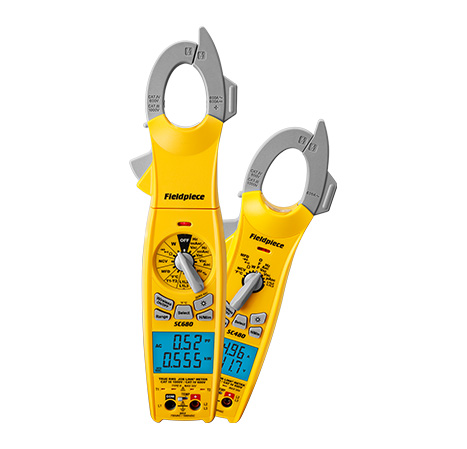
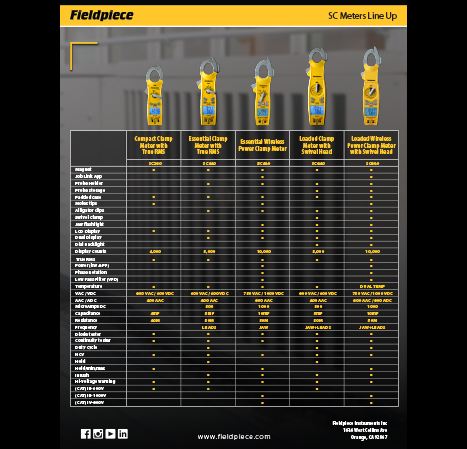
Modern Fieldpiece electrical meters take HVAC diagnostics to the next level. Designed specifically for the HVAC industry, these tools go beyond basic measurement capabilities. Here’s what sets them apart: 

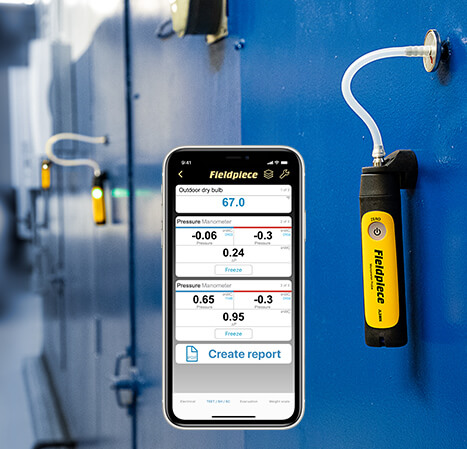
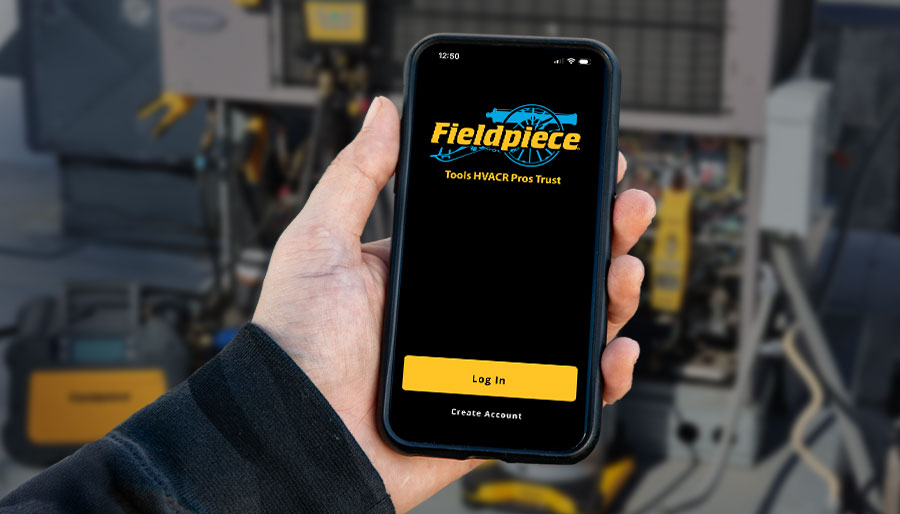
  • HVAC-Specific Design: Fieldpiece meters are built to handle the real-world challenges of HVAC environments—high temperatures, tight spaces, and variable loads. Wireless Connectivity: Bluetooth®-enabled models allow technicians to view diagnostics in real time while keeping blower doors closed and logging readings remotely through the Fieldpiece Job Link® System App, improving safety and efficiency.
  • Wireless Connectivity: By utilizing the Capacitor Under Load feature directly within the Job Link App, technicians can safely calculate live capacitance without shutting down a system or manually calculating formulas.
  • Accessibility in Tight Spaces: RCT2 Molex probe tips allow for seamless testing at the narrow control pins of ductless mini-splits without risking damage to the terminal block.
  • Rugged Durability and Built-in Functionality: Reinforced designs to withstand field use and integrated magnetic hangers and flashlights included on most models.
  •  Smart Testing Modes: Auto-ranging helps prevent false readings and safeguards sensitive components, while low-pass filtering ensures accurate variable frequency drive (VFD) measurements.

These innovations reflect a deep understanding of what HVAC pros need on the job: reliability, accuracy, and the ability to work more efficiently.

Electrical meters are instruments of innovation that enable technicians to deliver precise, safe, and dependable service. With Fieldpiece’s advanced line of electrical meters, HVAC professionals can confidently measure, diagnose, and maintain complex systems with industry-leading accuracy and connectivity. 

For more information, please see our Electrical Multimeters.
Categories
Blog

Job Link® App Features You Might Be Missing

Many Job Link® App users don’t realize how much more the app can do beyond viewing measurements. The free Job Link App plan delivers valuable features like sharing reports with ServiceTitan and adding containers of data.

Stepping up to Pro and Pro+ unlocks a set of tools designed to help you work faster, reduce callbacks, and elevate your professionalism on every job. From external insights to added efficiencies, these paid plans turn the Job Link App into a true productivity advantage – not just a measurement tool.

9 Job Link® App Features to Start Using Now

Share Reports with Service Titan (All)

Many Job Link® users may not realize that their measurement reports can easily be shared directly with ServiceTitan.

After completing your measurements in the Job Link® App, simply generate a PDF report. Once the report opens, tap the Share icon in the bottom left corner. From there, you can select ServiceTitan (if the app is installed on your device) just like you would share to Messages, email, or other apps.

Rename Containers (Pro)

Customize your measurement container names so that reports make the most sense to your customers. Identify containers with titles to match your test location and/or measurement purpose.  Simply head to the category tab, tap the pencil icon, type in your custom name, and hit save.

Add Containers (All)

Having the right containers in place helps keep your data clean and organized. You can add additional containers for Manometer, Airside, Refrigerant Side, Evacuation, and Electrical measurements by navigating to Measurement → Setup.

Create a Before & After Report (Pro)

Showing the impact of your work with real measurements is a great way to prove a job well done and build customer trust. The Job Link app can easily create before and after reports in a few simple steps.

  • Step 1: Go to the Customer tab – find existing customer name or create a new one.
  • Step 2: Select system name or create a new one.
  • Step 3: Go to the Report Builder tab (drawer icon)
  • Step 4: Select “Create Report Button” in the right. There will be a pop up that says Pre Work or Post Work. Choose Pre Work for the before report and then later go back and do the same while selecting Post Work. You will be able to see both generated reports in the Reports Builder section.

Live Look-In (Pro)

Ever come across a measurement that just doesn’t add up? Live Look-In gives you real-time remote support when you need it most.

With both parties logged into the Job Link App, managers or senior techs can see the same live measurements you’re seeing in the field, no screenshots or guesswork required. Collaborate instantly to diagnose issues faster, keep jobs moving, and help ensure the work gets done right the first time. The result? Fewer callbacks and more confident decisions on the job.

Geo Tagging (Pro)

Tracking equipment across large rooftops or multi-unit properties can be time-consuming. Geo Tagging eliminates the hassle.

Drop a pin at the exact location of each unit using satellite imagery and save key system details directly to the customer’s file. When you or another coworker returns, everything is already documented. Geo Tagging helps you identify the correct unit every time, keep data tied to the right system, and work more efficiently with clear, accurate information.

Photos and Notes (Pro)

A photo is only useful if you can find it later. With Photos and Notes, you can quickly capture and store critical jobsite details directly within the customer’s file – and include them in your reports for clear, professional documentation.

Easily access photos and notes anytime to prove your work, protect your business, and improve communication with customers and teammates. It’s documentation that works as hard as you do.

Build Teams (Pro)

The Job Link App makes team coordination simple and organized.

Assign techs to jobs, track customer history, and quickly search job and customer data all in one place. Shared visibility gives your entire team access to the information they need, helping jobs run smoother and keeping everyone aligned.

Invoicing (Pro+)

Take your workflow even further with Job Link App Pro+. Professional invoicing allows you to create and send polished invoices directly from the jobsite so you can get paid faster.

Add customizable parts and equipment for transparent billing, set hourly rates that reflect your business model, and improve overall profitability. With QuickBooks Online integration, invoices and payments automatically sync to reduce manual entry and accounting errors.

Whether you’re a field technician, service manager, or business owner, the Job Link App helps you get the job done right. Look more professional on every job, reduce callbacks, and stay organized from start to finish.

Explore all Job Link App features, request a demo, or download the Job Link App for free today.


Categories
Blog

Why Technicians Choose Analog Gauges for Refrigeration Work

With the rise of digital tools across HVACR, it’s easy to assume analog gauges are becoming a thing of the past. But when it comes to refrigeration work, many technicians still reach for analog – and for good reason.

We asked technicians directly whether they prefer analog gauges over digital in refrigeration applications. The response? For many, analog still earns a permanent spot in the tool bag.

1. Reliability When It Matters Most

One of the most consistent themes across technician feedback is reliability.

Digital tools offer powerful features, but they also depend on batteries and electronics. And as one technician put it, “batteries die at the worst moment… especially when a system goes down and needs immediate attention.”

An analog gauge, on the other hand, just works. No boot-up time. No battery concerns. No second guessing whether your tool is going to power on when you need it most.

2. Instant Feedback in the Field

Speed matters, especially in refrigeration.

Technicians noted that analog gauges provide immediate pressure readings, making it easier to quickly observe system changes. Digital probes, while precise, can take time to stabilize, which can slow down troubleshooting in fast-moving situations.

As one technician explained, “with manual gauges we get instant pressure and can see changes on the suction side much faster.”

3. Easy Calibration and Maintenance

Another major advantage? Simplicity.

Analog gauges can be quickly checked and adjusted in the field if readings seem off. There’s no need to send tools back for factory calibration or deal with downtime.

If something does go wrong, repairs are typically straightforward and affordable. In many cases, technicians can simply replace a gauge rather than an entire manifold.

4. Built for Harsh System Conditions

Refrigeration systems can be tough on tools, particularly in older or contaminated systems.

Technicians highlighted real-world conditions like:

  • Mixed refrigerants
  • Leak dye
  • Burnt oil
  • Dirty or aging systems (including legacy R22 equipment)

In these environments, analog gauges often come out ahead. They’re easier to clean and less likely to be affected long-term by contaminants. Digital tools, while advanced, can be more sensitive after repeated exposure to these conditions.

5. Reinforcing Core HVACR Skills

Another key point: analog gauges keep technicians sharp.

Without automated calculations, techs rely on their understanding of superheat and subcooling which are fundamental skills that are critical in refrigeration work.

As one technician noted, “any tech should know how to calculate it and not just rely on a digital gauge to give you the answers.”

The Bottom Line

Digital tools have come a long way and they absolutely have their place in modern HVACR work.

But when it comes to refrigeration, many technicians still trust analog gauges for their:

  • Proven reliability
  • Instant feedback
  • Ease of maintenance
  • Durability in harsh conditions
  • Cost-effectiveness

It’s not about one being better than the other, it’s about using the right tool for the job.

And for refrigeration? Analog still delivers.

Discover what sets Fieldpiece analog gauges apart.


Categories
Blog

Analog Gauge Sets: The HVACR Tech’s Trusted Companion

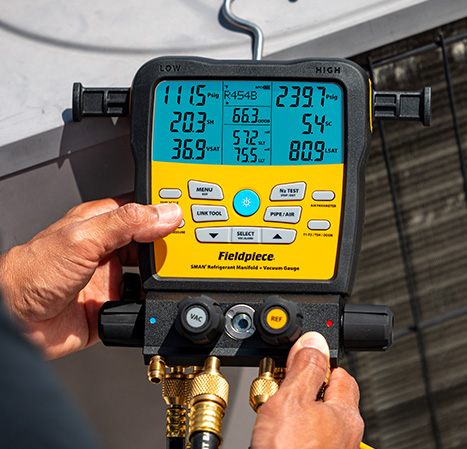
For decades, analog manifolds were the industry standard. That changed when Fieldpiece released the SMAN® series – a breakthrough that defined what modern, practical digital manifolds should be. By increasing accuracy, automating calculations, and minimizing human error, digital manifolds reshaped how technicians diagnose and service HVACR systems.

Even with today’s innovations, analog gauges remain a trusted tool in HVACR. Many technicians learn on analog tools, and for those early in their careers, digital manifolds may be outside their budget. When used correctly, analog gauges deliver accurate readings, and many techs trust them for their simplicity and toughness in harsh environments.

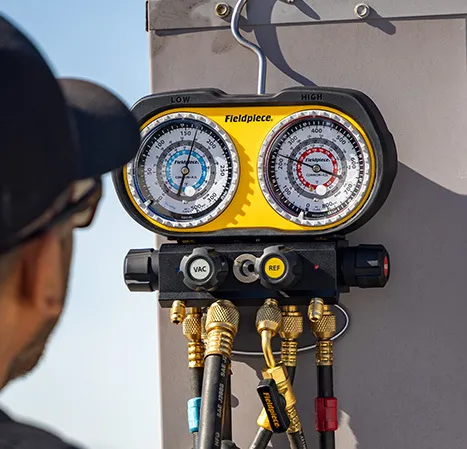
Fieldpiece analog manifold gauge sets give HVACR pros a dependable, affordable option, a durable backup in the truck, or a rugged tool for situations where they prefer not to risk damaging higher-priced digital equipment. Here’s what makes them different from the rest.

analog gauge set

Why Choose Fieldpiece Analog HVAC Gauges?

  1. Built Rugged for the Jobsite

Fieldpiece analog manifolds feature a heavy-duty housing designed to handle tough jobsite conditions and are more rugged than other analog gauges. Built with durability in mind, they’re a reliable option for working on heavily contaminated systems or burnt-out compressors where protecting digital tools is a priority. With a straightforward, mechanical design and a focus on long-term reliability, these gauges give technicians confidence when tackling demanding service calls.

  1. SMAN®-Style Manifold Block Technology

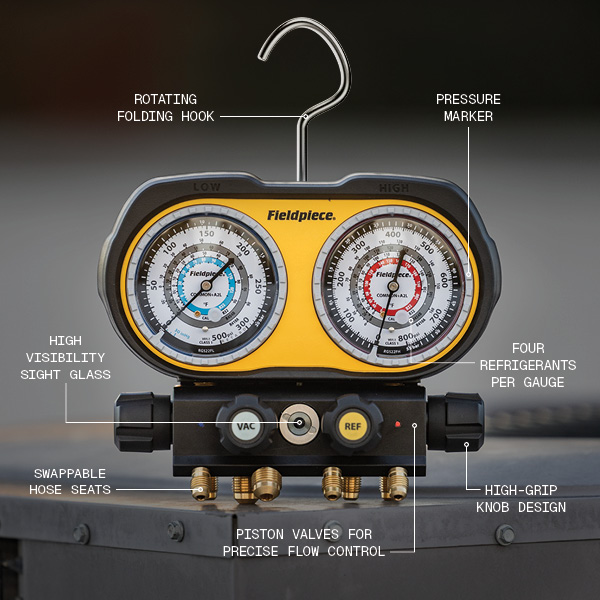
Fieldpiece analog manifold gauge sets feature the proven, SMAN®-style manifold block with pressure-tight reliability. This time-tested construction uses durable piston valves to deliver smooth operation and precise flow control, helping technicians work confidently on every job.

  1. Integrated Sight Glass

A built-in sight glass on both the 3-port and 4-port manifolds allows you to visually confirm refrigerant flow and assess refrigerant quality. Use the sight glass to identify the presence of bubbles, moisture, or contaminants – adding confidence during recovery and charging.

  1. Rotating Pressure Marker

The adjustable pressure marker gives technicians a fast, visual reference point to mark the correct system pressure or the starting pressure during a nitrogen pressure test – no sharpie or grease pencil required. Rotate the outer dial’s arrow to match the needle and you’ll know at a glance if the system drops pressure over time – making pressure checks clearer and more reliable.

  1. Easy Organization

Service truck organization can be a challenge after a long day. The swappable hose seats on the manifold block keep your hoses connected in a clean, closed loop when not in use. 1/4” hose seats are standard and 5/16” fittings are available as an option for those who work regularly on mini splits.

Fieldpiece analog gauge sets also include a durable, 360° rotating hook that makes it easy to hang the gauges in your truck or directly on equipment while taking measurements. When not in use, it folds neatly back into the housing.

  1. Cost-Effective Without Compromise

Whether you’re a new tech investing in your first manifold or an experienced pro building out your truck setup, Fieldpiece analog gauge sets offer reliability and performance at an accessible price point. All gauges are compatible with A1, A2L, and A3 refrigerants, future-proofing your toolkit as regulations change. The HVAC gauge sets and Refrigeration gauge sets each support four refrigerant saturation temperature rings for maximum versatility.

Analog & Digital Gauges: The Ideal Combination for HVACR Pros

Even seasoned technicians keep both digital and analog manifolds on hand. Analog gauges allow for quick, reliable visual checks and act as a dependable backup when protecting digital tools is priority. Digital manifolds offer precision, automatic calculations, wireless connectivity, and powerful reporting – especially when paired with the Job Link® System.

Together, they give HVACR professionals the flexibility to adapt to any jobsite, any condition, and any system they encounter. Whether you’re new to the field or have decades of experience, Fieldpiece analog gauge sets deliver.

Find a distributor near you and grab one today!