




- Merchandise Shop
- Where to Buy
-

 English








 English
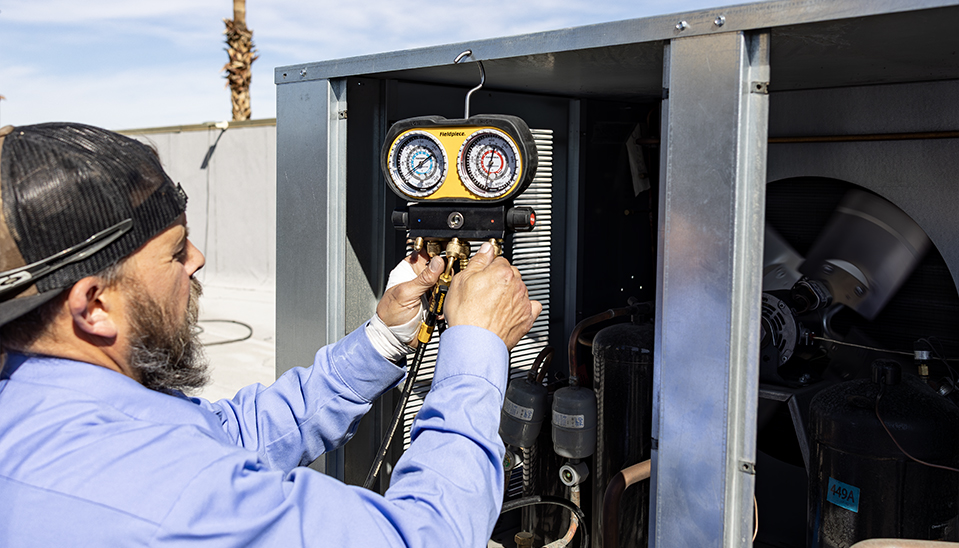
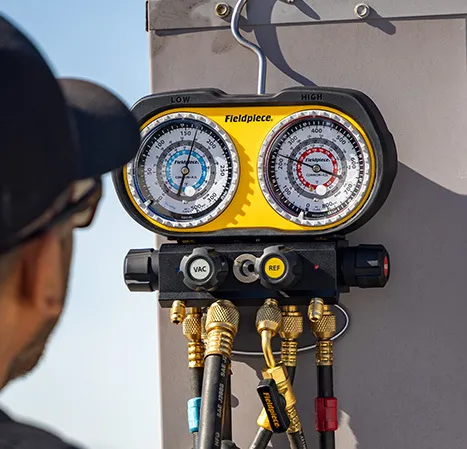
With the rise of digital tools across HVACR, it’s easy to assume analog gauges are becoming a thing of the past. But when it comes to refrigeration work, many technicians still reach for analog – and for good reason.
We asked technicians directly whether they prefer analog gauges over digital in refrigeration applications. The response? For many, analog still earns a permanent spot in the tool bag.
One of the most consistent themes across technician feedback is reliability.
Digital tools offer powerful features, but they also depend on batteries and electronics. And as one technician put it, “batteries die at the worst moment… especially when a system goes down and needs immediate attention.”
An analog gauge, on the other hand, just works. No boot-up time. No battery concerns. No second guessing whether your tool is going to power on when you need it most.
Speed matters, especially in refrigeration.
Technicians noted that analog gauges provide immediate pressure readings, making it easier to quickly observe system changes. Digital probes, while precise, can take time to stabilize, which can slow down troubleshooting in fast-moving situations.
As one technician explained, “with manual gauges we get instant pressure and can see changes on the suction side much faster.”
Another major advantage? Simplicity.
Analog gauges can be quickly checked and adjusted in the field if readings seem off. There’s no need to send tools back for factory calibration or deal with downtime.
If something does go wrong, repairs are typically straightforward and affordable. In many cases, technicians can simply replace a gauge rather than an entire manifold.
Refrigeration systems can be tough on tools, particularly in older or contaminated systems.
Technicians highlighted real-world conditions like:
In these environments, analog gauges often come out ahead. They’re easier to clean and less likely to be affected long-term by contaminants. Digital tools, while advanced, can be more sensitive after repeated exposure to these conditions.
Another key point: analog gauges keep technicians sharp.
Without automated calculations, techs rely on their understanding of superheat and subcooling which are fundamental skills that are critical in refrigeration work.
As one technician noted, “any tech should know how to calculate it and not just rely on a digital gauge to give you the answers.”
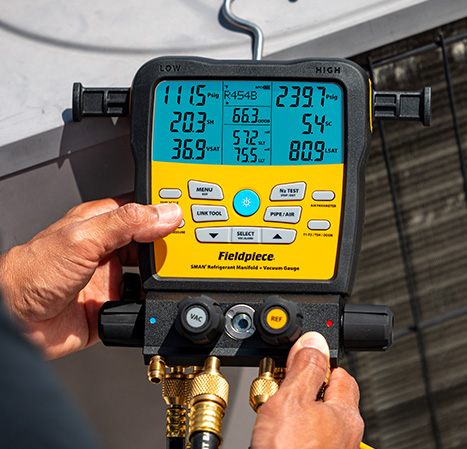
Digital tools have come a long way and they absolutely have their place in modern HVACR work.
But when it comes to refrigeration, many technicians still trust analog gauges for their:
It’s not about one being better than the other, it’s about using the right tool for the job.
And for refrigeration? Analog still delivers.
Discover what sets Fieldpiece analog gauges apart.