Categories
Blog

Buyer’s Guide: What to Look for in an HVAC Vacuum Pump

HVAC vacuum pumps are an essential tool for HVAC technicians and contractors, as they play a crucial role in removing air and moisture from the refrigerant system before charging it with refrigerant. A vacuum pump helps to ensure that the HVAC system operates efficiently and effectively, thus providing another happy customer indoor comfort and lower energy costs.

When looking for an HVAC vacuum pump, there are several key factors that you should consider to ensure you make the right choice. Here are some of the most important ones:

Oil Condition and Changes

Clean oil plays an important role in the performance of your HVAC vacuum pump, and is the single most important factor in how quickly a vacuum pump can remove all moisture and non-condensable gasses from an HVAC system. They should provide clear visibility of the condition of the oil, those with a backlit reservoir being the easiest to view and assess.

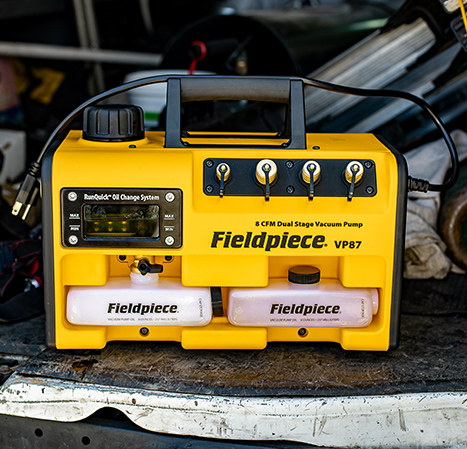
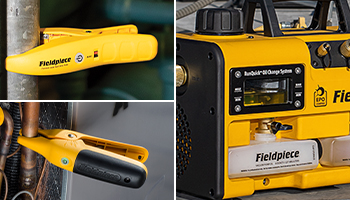
The best HVAC vacuum pumps also have technology that allows you to change oil without powering down and losing vacuum. The Fieldpiece VP67, VP87 and VPX7 with the RunQuick® oil change system are great examples, allowing for oil changes in less than 30 seconds with no mess.

Flow Rate: CFM

The vacuum flow rate is another critical factor to consider when purchasing a HVAC vacuum pump. The cubic feet per minute, or CFM, directly affects the time it takes to evacuate the air from the system, and the higher the CFM the faster the job can be completed given proper hose configuration. Most HVAC pumps flow rate vary between 2 and 10 CFM. As a rule of thumb, most residential homes require a 5-CFM pump. Systems with longer line sets require up to 10 CFM.

Pump Power

While pump power and CFM rate are related, they are worth considering separately. Most vacuum pumps have a power rating between 1/4 and 3/4 HP. This gives you an idea of how well the pump operates under real-world conditions.

Ultimate Vacuum Pressure

The ultimate vacuum pressure is the lowest pressure that the vacuum pump can achieve. The lower the pressure, the better the vacuum pump will perform in removing air and moisture from the system. Look for HVAC vacuum pumps with 15 microns ultimate vacuum or better to get the job done.

Size and Portability

The size and portability of the vacuum pump are also essential considerations given the variability of job sites technicians often work in. A vacuum pump that is lightweight and portable is easier to carry around, and does not always result in lesser performance.

Durability

A HVAC vacuum pump is an investment, and you want to ensure that it lasts for a long time. Look for vacuum pumps that are made from durable materials and that have a solid construction. Additionally make sure it has a wide base to help ensure it will not tip over or spill oil.

By considering these factors you can find the right vacuum pump for you and ensure you can service your customers effectively. Fieldpiece offers three levels of HVAC vacuum pumps. With 6 CFM, 8 CFM, and 10 CFM options that both feature the RunQuick® oil change system, and are lightweight and durable, you are sure to find a HVAC vacuum pump to meet your needs.


Categories
Blog

6 Points to Look for in an HVAC Combustion Analyzer

A combustion analyzer is a must-have tool for many HVAC professionals, especially those working in colder climates. It helps uncover issues that could lead to dangerous conditions, such as high levels of carbon monoxide.

You should look for six key features to ensure you get the most out of your combustion analyzer. This article details these features and why they are essential for HVAC professionals.


What Is a Combustion Analyzer?

A furnace uses the process of combustion to generate heat. Combustion occurs when oxygen, a fuel and a heat source are combined. In a natural gas furnace, the oxygen is provided by ambient air, the fuel is natural gas, and the heat source traditionally is a pilot light or a hot surface igniter. The right balance of these three elements will yield the most effective combustion.

Combustion analyzers help measure the safety and efficiency of heating appliances. Combustion analyzers complete this task by measuring the oxygen (O2), carbon monoxide (CO) and heat produced in the combustion. With this information, technicians diagnose potential problems and determine whether necessary adjustments or repairs are needed.


  1. Long-Lasting Sensors

Combustion analyzers typically have sensors to measure oxygen (O2) and carbon monoxide (CO). These sensors are tricky to maintain because they degrade by simply being exposed to the air. Meaning that whether the combustion analyzer is in use or not, the O2 and CO sensors are degrading over time. This leads to most sensors having to be replaced every year or two, which is expensive and increases the cost of ownership of the tool.  Look for a combustion analyzer with technology that manages this sensor degradation better.

A combustion analyzer’s sensors are vital in diagnosing and maintaining HVAC heating appliances. These sensors must be in good working order to ensure accurate results. Replacing faulty sensors is a costly endeavor which is why investing in a combustion analyzer with long-lasting sensors is vital.

Fieldpiece has patent-pending SensorVault™ technology that seals the O2 and CO sensors from exposure to air when the tool is powered off, thus prolonging the life of the sensors and lowering the overall cost of ownership. The Fieldpiece sensors are guaranteed to last for 4-years.


  1. Field Replaceable Sensors

Eventually, all oxygen and carbon monoxide sensors will need to be replaced and/or sent for calibration. This leads to downtime if the entire tool needs to be sent in.

Look for a combustion analyzer that has field-replaceable sensors to ensure little to no downtime when sensor replacement or calibration is needed.

The Fieldpiece combustion analyzers with field replaceable sensors include the CAT85 and CAT45 models. They allow technicians to swap out a bad sensor and get back to their job seamlessly. Plus, for calibration services, only the sensors need to be sent in. By having a backup pair of sensors on-hand, the combustion analyzer is ready to go.


  1. Water Trap Maintenance

Typical combustion analyzers have a water trap to condense and collect water vapor from the flue to prevent exposure to sensors. When the water trap fills up, the technician needs to remember to empty it or risk unreliable combustion readings or even potential damage to the tool. Plus, in colder climates a water trap filled with water can freeze in the truck overnight and crack the water trap. The best combustion analyzers protect the sensors from moisture with little to no water trap maintenance.

For example, the Fieldpiece CAT85 combustion analyzer features a patent-pending HydroCycle™ pump which condenses the water vapor and ejects it back into the flue pipe from where it came. Thus, it eliminates the need for a water trap all together.


  1. Live Draft Pressure

Harmful and often poisonous gasses are expelled outside by way of the exhaust flue pipe. In order to ensure that these unwanted gasses are flowing in the right direction the draft pressure in the flue should be measured. Most combustion analyzers will measure this draft pressure; however, typically it takes two separate tests to test for draft pressure and for proper combustion. Save some time by looking for a combustion analyzer that measures both draft and combustion at the same time.

The Fieldpiece combustion analyzer CAT85 measures a live draft pressure while simultaneously performing a combustion analysis. This not only saves time on the job, but uncovers any effects to the draft caused by adjustments made to the system or commonly vented appliances like a water heater.


  1. Dual Port Manometer

Checking for sufficient airflow through the furnace and verifying proper gas pressures at the gas regulator are essential for optimal system performance. A dual port manometer tool measures static pressures in the air handler to check for excessive airflow restrictions and measures gas pressures at the regulator. Typically, this is a separate tool the technician needs to carry to the job site.

The Fieldpiece combustion analyzer CAT85 has a built-in dual port manometer to streamline testing static pressures and dialing in the correct gas pressures at the regulator. Plus, it’s one less tool that needs to be carried to the job site.


  1. Ease of Use

When it comes to combustion analyzers, ease of use is essential. A combustion analyzer HVAC professionals can trust should be easy to set up and operate. It should have a large and easy-to-read display so technicians can diagnose issues with HVAC systems with speed and accuracy.

Additionally, apps help organize information for the technician and the customer. The Job Link® System App from Fieldpiece is an excellent example of how these apps can help streamline the job.

This app allows technicians to create, store and share combustion test results. These features make it easier than ever to provide customers with detailed reports. They also help you organize and pull up your data at later trips to the same customer.


Fieldpiece Combustion Analyzer Near Me

Finding a combustion analyzer with all these features may seem impossible. That is until you find out that Fieldpiece combustion analyzers provide all six necessary points and more.

Take advantage of HydroCycle™ pump and SensortVault™ technology while using our Job Link app with the CAT85 and CAT45 Fieldpiece Combustion Analyzers. Both models come with four-year sensor life warranty to lower the overall cost of ownership.

Find a Fieldpiece retailer near you to get the best HVAC combustion analyzer available!



Categories
Blog

National HVAC Tech Day: Why HVAC Techs Deserve a Day All to Themselves

Every year, we hear about national observances – many with a goal of driving awareness to groups working toward eliminating diseases or funding charities, and others design to recognize hard-working tradesman.

The HVACR industry is recognized on National HVAC Tech Day! Observed annually every twenty-second day of June, National HVAC Tech Day recognizes the dedication and hard work industry professionals put in every day and on every job. From braving uncomfortable weather conditions and tight, dark crawl spaces to keeping up with the latest best practices ensuring jobs are always performed safely and accurately, HVACR techs are valuable to every community across the globe.

HVACR technicians are essential to our everyday functions. Their impact to their communities goes beyond repairing a broken air conditioning unit or servicing a heating furnace. In fact, they play an integral role in keeping our homes cool and comfortable when the hot summer sun is beaming through the windows; keeping families warm when outdoor temperatures dip below freezing; ensuring food is maintained at a required temperature so food resources don’t spoil prematurely; maintaining standards of comfort while working toward reducing environmental impacts; and the list goes on and on.

Thanks to the skillsets, training and knowledge HVACR techs acquire to stay ahead of the curve, people everywhere can take comfort in knowing their home temperature is set just to their liking and so much more. Plus, with so many innovative, cutting-edge HVACR tools being introduced to the market, HVACR techs work hard to stay up with the latest to ensure they can cater to customers more quickly and deliver work that is efficient and accurate.

This year, celebrating a technician can be done in many ways. Here are some quick ideas to say “thanks” to your service technician:

  • Give your tech a shout out on social media
  • Always be kind and thankful to your tech – maybe send them off to their next job with an ice-cold water (or a warm cup of coffee)
  • Gift them with an HVACR tool they’ll love
  • Change your filter as often as required

Happy National HVAC Tech Day to all of the masters of the trade!
Categories
Blog

Fieldpiece Patented Technologies – Designing Innovative HVACR Tools with HVACR Techs at the Forefront

If you know Fieldpiece, you know we’re always working hard to help HVACR pros do their job easier, faster and better. We want to bring you higher efficiency and increased productivity, and we’re proud to say that our hard work has paid off in the form of industry accolades and game-changing patents.

Two of our most recognized patents techs rave about are our Rapid Rail® Sensor Technology and RunQuick® Oil Change System.

Rapid Rail® Sensor Technology

Let’s start with our Rapid Rail® Sensor Technology. This advanced technology is featured in the Job Link® System Premium Pipe Clamp Probe, JL3PC; and in the two largest pipe clamps in the industry, measuring up to 41/8” – the Large Pipe Clamp, TC48 and the wireless Job Link® System Large Pipe Clamp, JL3LC. Previous technology measured temperature with readings affected by the ambient air and  moisture. Rapid Rail® Sensor Technology perfected the process – only giving accurate readings.

With two sensors, one on either side of the pipe clamp tool, the electrically conductive pipe itself completes the circuit on both sides, giving the tech a stabilized and accurate reading within five seconds. And, as the tech adjusts the system with the clamp attached, they can instantly see temperature changes as they happen in real time.

RunQuick® Oil Change System

Our second most notable patent is for the RunQuick® Oil Change System. This allows techs to change the oil on a vacuum pump without turning off the pump or losing vacuum. In less than 20 seconds, a tech can swap out the old oil and add in new oil.

During an evacuation, once oil has become cloudy, that means it could be saturated with moisture or contaminants. This signals that it needs to be changed or you’ll experience longer system evacuation times. Fieldpiece pumps equipped with the RunQuick® Oil Change System like the Fieldpiece Vacuum Pumps, 10 CFM VPX7, 8 CFM VP87 and 6 CFM VP67 also include a large oil viewing window that allows techs to see the oil condition, so they know when it’s time for a quick change. The days of not changing oil to avoid the mess or the hassles are things of the past.

Add any of these innovations to your tool bag to get ready to work more efficiently and more effectively.

www.fieldpiece.com

Categories
Videos

Fieldpiece Brings Out the Cool Tools

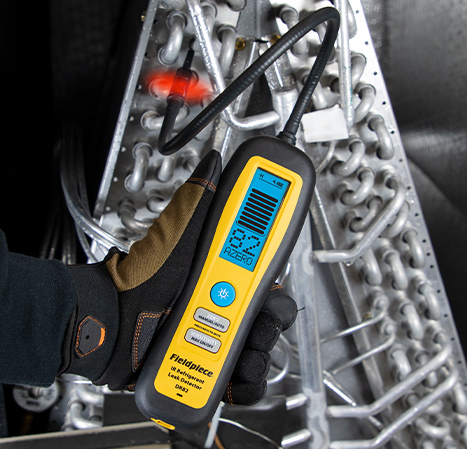
Fieldpiece Instruments’ HVACR tools keep the HVACR professional cool when the temperatures rise. From their clear, easy-to-read leak detectors to the MG44 Wireless Vacuum Gauge, the Fieldpiece cooling season HVACR tools enable technicians to work easier, faster, and better.

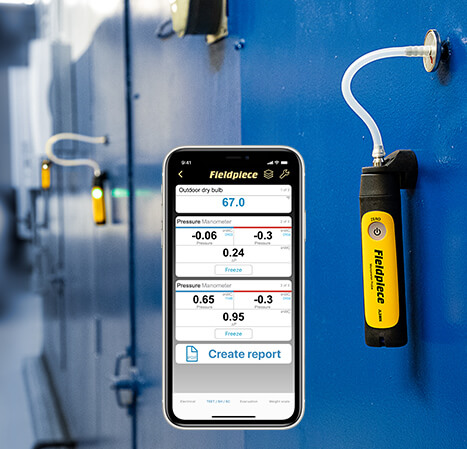
Professionals use the wireless HVACR tools stand-alone, integrated with the Job Link® System App, or connected to the latest SMAN Refrigerant Manifold 4-Port. For fast, easy, on-the-fly oil changes, HVACR technicians rely on the Fieldpiece RunQuick™ Oil Change System. From clamp meters and digital manifolds to the Job Link® System Flex Psychrometer Probe, Fieldpiece Instruments provides all the HVACR tools to make the HVACR professional’s job easier while delivering excellent service.

Categories
Videos

#MasteroftheTrade Scholarship: Entries We Loved