











Categories
Press Releases

Fieldpiece Instruments Launches Fieldpiece University

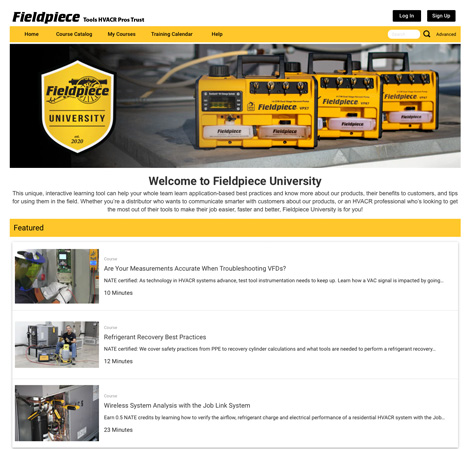
ORANGE, CALIF., September 30, 2021 – Fieldpiece Instruments, the leading manufacturer of professional-grade tools for HVACR pros by HVACR pros, announces the launch of Fieldpiece University – a new online training platform dedicated to providing application-based training to HVACR field pros, distributors and sales reps to help them do their job easier, faster, and better.

Designed to be the go-to resource for HVACR, Fieldpiece University features two modules: one channel to help HVACR distributors, sales reps and counter reps match HVACR technicians with the right tools for the job; and another to provide technicians in the field technical training to become masters of the trade with the latest best practices, industry insights, tips and tools to work smarter, not harder.

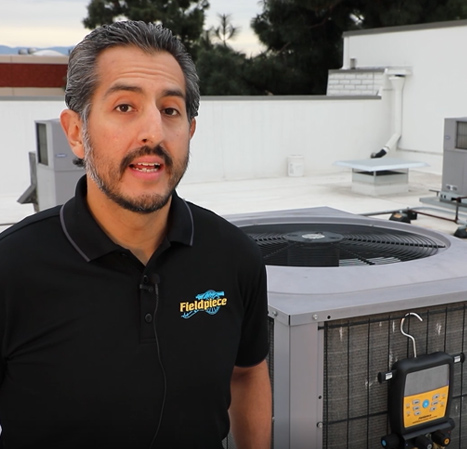
“Every day, we talk to HVACR professionals about how we can make their lives easier in the field,” says Tony Gonzalez, Technical Training Manager at Fieldpiece Instruments. “These conversations encouraged us to develop a new online training tool that anyone can use to improve their skills – whether you’re behind the sales counter talking to a contractor about a vacuum pump, or you work in the field and need to know the proper way to use a stand-alone vacuum gauge while performing a system evacuation.”

The Fieldpiece University platform was built in partnership with BlueVolt, a company that specializes in learning management system (LMS) tools used by more than 5,000 companies to educate professionals from a variety of industries. Featuring interactive training modules, helpful video content, and value-added resources with quizzes and assessments to cement new learning, the platform also offers technicians an opportunity to earn continuing education (CE) credits for select coursework.

The distributor module helps wholesalers and distributors better understand what field professionals are looking for out of their tools and offers insight to help a more knowledgeable sales staff better match customers with the right tools for the job.

Fieldpiece University’s field technician module offers training on specific products, techniques and applications, as well as myriad ways to extend HVACR industry knowledge and insight to stay ahead of the curve. CE credit offerings ensure field pros stay current with new technology, laws and regulations.

Fieldpiece University can be accessed at home on a desktop or while on break from work via a mobile device, making the program convenient anytime, anywhere. The platform offers a wide range of learning modules today, with new content expected to be added monthly to respond to industry demands and help keep industry professionals at the top of their game long-term. In-person trainings are also available via special request.

First time distributor or end user learners new to BlueVolt should click here to Sign Up for a free account: https://fieldpiece.tiny.us/New

End users already with an account on BlueVolt should click here to add Fieldpiece University to their BlueVolt account:  https://fieldpiece.tiny.us/Tech

Distributors already with an account on BlueVolt should click here to add Fieldpiece University to their BlueVolt account:  https://fieldpiece.tiny.us/Dist

For more information about Fieldpiece University, please visit: https://go.bluevolt.com/fieldpiece/s/

ABOUT FIELDPIECE: Fieldpiece Instruments is an innovative technology company focused on helping industry professionals do their jobs easier, faster and better around the globe. We deliver on this promise through industry-leading devices with the broadest range of professional-grade tools and technology inspired by real-world application and field use. Fieldpiece is focused on serving the HVACR industry exclusively, enabling HVACR professionals to become Masters of the Trade. For more information, please visit http://www.fieldpiece.com, and be sure to follow Fieldpiece on Facebook, Instagram, YouTube and LinkedIn.
Categories
Blog

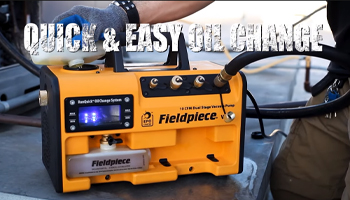
Why Change your HVAC Vacuum Pump Oil?

Because it changes everything.

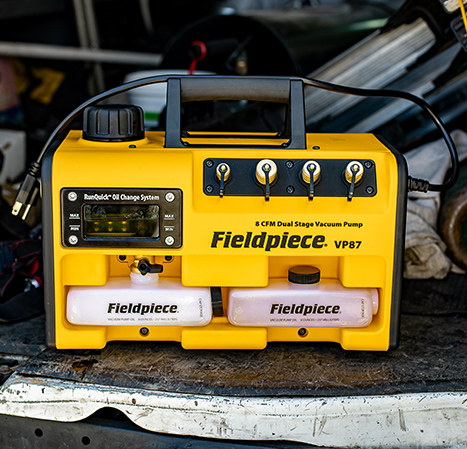
We are all familiar with the rule of changing the oil in our vehicles, right? That’s because it makes them work more efficiently, run better, and last longer. The oil quality in your HVAC vacuum pump affects pump performance and helps you perform evacuations quicker — but only if you change it often. And we mean way more often than every three months. That’s because you could have the best vacuum pump on the market, but it only performs at peak efficiency if the oil is changed as soon as it starts to lose its effectiveness.

You see, the oil in your HVAC vacuum pump is the key ingredient to keeping the vane lubricated and creating a proper seal for an optimal vacuum, which then helps suck moisture and other non-condensables and contaminants from your system while performing an evacuation. Since vacuum pumps don’t have filters, once the oil is full of contaminants, pulling a vacuum is less efficient. This means that your evacuations take more time, and the mechanical parts of your pump could suffer.

Some oils are based on mineral oil and some are silicone-based synthetics, but depending on the pump you’re using, your oil could have many different formulations. All of them are well-refined and have a specific viscosity and low vapor pressure. That helps it lubricate the mechanism, remove moisture and contaminants from the system and gives it a smooth start-up at varying weather conditions. While most oils typically work well with any pump, it is good practice to use the manufacturer’s oil for peak pump performance.

And while not necessary as most pumps are capable of holding a deep vacuum with used oil, it is recommended to start an evacuation with fresh, clean oil every single time if possible.

Also, while you’re performing the evacuation, change the oil as soon as it becomes saturated with moisture or contaminants. This may need to be done several times during an evacuation and doing this consistently is critical to pulling a full, deep vacuum quickly. But how do you know when to change it? If you’re watching your vacuum gauge and the microns start to even out at a level higher than you want, or if the reading starts bouncing up and down, check your oil. If you notice discoloration – either lighter from moisture or darker from heat or contaminants – it’s time to change the oil.

At the end of the day, for the best possible outcomes you need large inner diameter (ID) vacuum-rated hoses; clean, dry vacuum pump oil; and a top-of-the-line HVAC vacuum pump like our VPX7. Armed with these tools, enjoy fast and effective oil changes every time!

Categories
Blog

Top Three Reasons You’ll Love a 1000′ of Range With Wireless Tools

Wireless tools have always been a great invention due to the overall convenience of not needing to rely on plugging a tool in. However, in their early days, many still lacked the torque and long-lasting power of corded tools. Today, if you look around the job site, almost everyone is using a cordless tool. The technology for HVACR tools has made tremendous strides and the move to HVACR wireless tools is moving even faster.

Ever since manometers hit the industry “scene,” HVACR techs had been forced to snake long hoses between systems and walls. After all, if you want to get an airflow reading from directly above the coil, you need to make sure your device is in an exact, accurate location. If you don’t have enough hose, then you end up settling for a less-than-ideal location. Plus, if you’re able to reach the right location in the crawlspace, have fun pulling your tangled hoses all the way there. Plus, you need to stay next to the manometer to get a reading. So many hoses and messy hassles.

Much like the cordless revolution with power tools, the wireless revolution is here for HVACR diagnostic tools. Here are three reasons to love working with wireless tools on the job site.

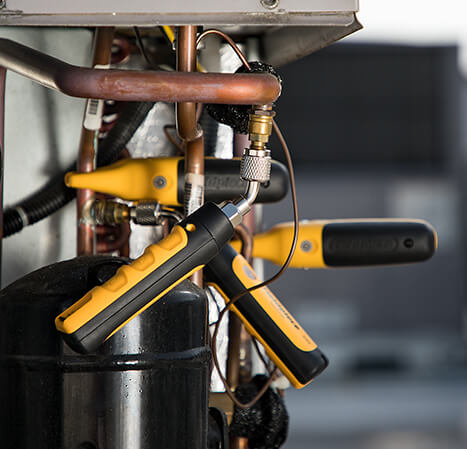
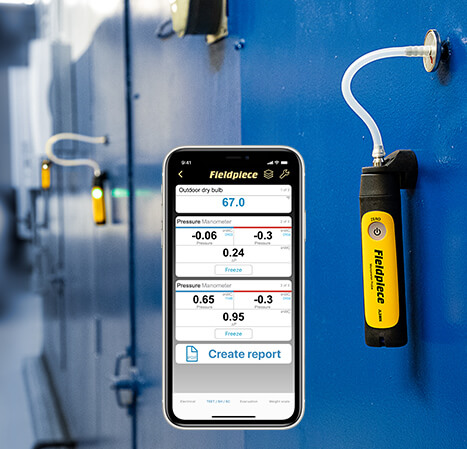
1. Freedom from long hoses. When you’re using a wireless dual port manometer, there is no need to drag long hoses that often lead to hazardous outcomes. Instead, place your devices exactly where you need them and move on. Because they run on batteries, readings are taken from anywhere on the jobsite as you work on the system.

2. Get exact measurements. We all know that getting a reading from the right place helps make your measurements more accurate and speeds up the process of diagnosing a system. One of the biggest benefits of wireless diagnostic tool technology is the ability to measure and monitor electrical, airflow and refrigerant performance at the same time. By using a wireless manometer, you aren’t limited by hose length. By drilling a hole in exactly the right place and inserting the probe, techs get the measurement needed. The wireless tool is the latest advancement to make life easier for the HVACR technician.

3. Take readings from 1000’ away. Working with wireless tools means there is no limit set by hoses or cords. Some of the newest wireless tools today have a range of up to 1000’ line of sight. That’s more than three football fields of range! From that far away, you have the ability to monitor a system and see right away what is affecting other readings. That’s a lot less time walking back and forth between the control panel to the manometer. Just think of the time that is saved from this advanced technology.

Moreover, when connected to apps like the Job Link® system app, wireless tools allow techs to be in multiple places at one time, with the freedom to work the way they want. They even make a single tech as efficient as two techs at diagnosing system performance!

All of these reasons and more make the newest wireless tools some of the best friends an HVACR tech can have in their toolbox.

Need to find some that offer 1000’ of wireless range? Check out www.fieldpiece.com.

Categories
Videos

Fieldpiece University | Keeping HVACR Professionals at the Top of Their Game

Fieldpiece Instruments not only provides the tools to meet the needs of the HVAC professional, but Fieldpiece University also offers online HVAC training to keep those professionals at the top of their game. Fieldpiece University enables distributors, sales reps, counter pros, service techs and other industry professionals to select the right tools for the job—and so much more.

With Fieldpiece University’s HVAC training, technicians earn continuing education (CE) credits and learn the latest industry best practices. This HVAC technician training shows you how Fieldpiece Instruments uniquely design their products to meet the HVACR professional’s needs and trains them in the best methods for using each instrument in different applications. At Fieldpiece University, class is always in session; enroll today!

Categories
Press Releases

Fieldpiece Instruments Wins a 2021 Pro Tool Innovation Award

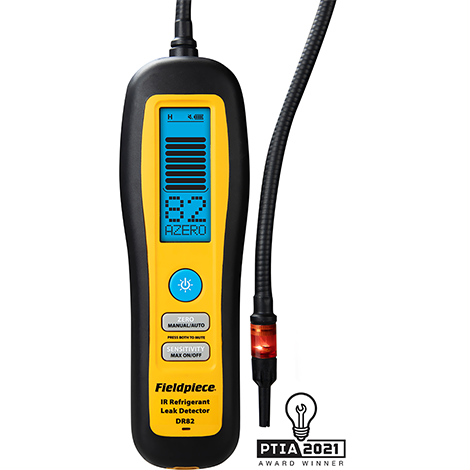
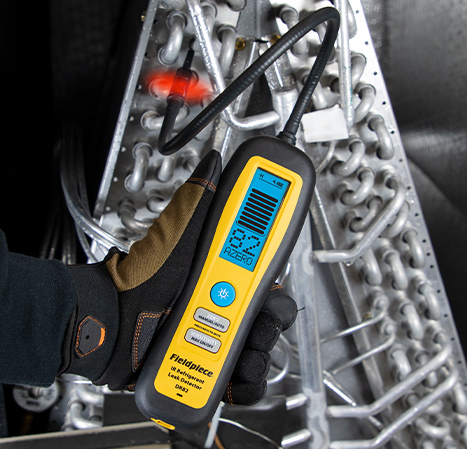
Orange, Calif., September 21, 2021 – Fieldpiece Instruments, the leading manufacturer of professional-grade tools for HVACR pros by HVACR pros, received a Pro Tool Innovation Award for the Infrared Refrigerant Leak Detector DR82. A diverse panel of judges made up of contractors, construction business owners, tradesmen, and media professionals came together this year to vote on the most innovative construction and outdoor power equipment industry products in the world. The Fieldpiece Infrared Refrigerant Leak Detector DR82 won in the Test and Measurement Category.

According to the judges, “Detecting refrigeration leaks comes with different challenges than water and moisture leaks. A couple of things really stood out to our voters on the Fieldpiece Infrared Refrigerant Leak Detector DR82 to help deal with those challenges. First, it doesn’t trigger a false positive thanks to soap or oil. Plus, it’s more than 20 times more sensitive than soap bubbles with a sensitivity level of <0.03 oz/yr. Wrap it all up in a compact handheld unit with an easy-to-read screen and your refrigerant leak detection is faster and easier than ever before.”

For over a decade, our refrigerant leak detectors have set the industry standard for durability, sensitivity, and reliability. Now, our newest Infrared Refrigerant Leak Detector is raising the bar. “The Infrared Refrigerant Leak Detector, DR82 brings a higher level of performance and offers a new, bright blue backlit LCD screen that is easy to read. To understand more details about the leak, our Infrared Refrigerant Leak Detector has a numerical leak size indicator, bar graph and features a lighted tip, so you can see the location of the leak,” said Rachel Newport, Director of Marketing. “We are honored to have been voted one of the best in the Test and Measurement category by this expert panel of judges.”

Portable and powerful — the new design is more compact and small enough to fit in a back pocket. The Fieldpiece Infrared Refrigerant Leak Detector DR82 is built to work all day with a USB rechargeable battery that can get 10 hours of use per charge.  It’s designed for the field with rugged, impact- and water-resistant, IP54-certified overmolded body. The Infrared Refrigerant Leak Detector DR82 uses an infrared sensor that lasts 10 years and is packaged in a blow-molded carrying case with 5 all-in-one replacement filter tips.

For more information on the Fieldpiece Infrared Refrigerant Leak Detector DR82 please visit the product page: https://www.fieldpiece.com/product/dr82-infrared-refrigerant-leak-detector-copy-2/

ABOUT FIELDPIECE: Fieldpiece Instruments is an innovative technology company focused on helping industry professionals do their jobs easier, faster and better around the globe. We deliver on this promise through industry-leading devices with the broadest range of professional-grade tools and technology inspired by real-world application and field use. Fieldpiece is focused on serving the HVACR industry exclusively, enabling HVACR professionals to become Masters of the Trade. For more information, please visit http://www.fieldpiece.com, and be sure to follow Fieldpiece on Facebook, Instagram, YouTube and LinkedIn.

Categories
Blog

5 HVAC Hazards to be Aware of During Heating Season for HVACR Professionals

Fall is here and winter is approaching. That means we are officially in heating season. While accidents happen, there are a few ways to remain cautious for a safer, incident-free winter. 

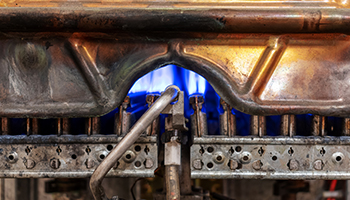
Working in colder climates has some obvious challenges. For one, HVACR professionals deal with extreme weather while working long, tiresome hours near components that could be red hot. They also deal with potentially deadly gasses like carbon monoxide, propane and natural gas.  

Here are some ways to make sure technicians work safely around the most common HVACR industry hazards faced:

1. CO Exposure – This is the biggest danger, both to you and to the homeowner or building occupants. Carbon monoxide (CO), a natural byproduct of burning natural gas, is an odorless, colorless gas that is rightly known as the silent killer. While prolonged exposure can lead to death, breathing air saturated with CO for even a short time can quickly overwhelm and incapacitate you. When working around heating equipment, you should use a CO tester to confirm you’re not being exposed. Be sure to follow all safety guidelines while installing a system to ensure no CO gets into the home or the conditioned space.

2. Burns – There are multiple ways an HVACR tech might burn themselves – especially in the winter. Working close to open flames and hot elements, heating systems can put out a lot of excess heat. Plus, techs often find themselves needing to solder connections and other components – the opportunities for burns are endless. The best way to stay safe is to know where the sources of heat are and work carefully and deliberately around them. Don’t rush your work and don’t guess if something has cooled off enough to touch.

3. Fatigue – Getting tired comes with the territory when crawling around in the dark and lifting heavy equipment. To avoid fatigue, get plenty of rest before starting your workday. Also, working safely is often the first thing overlooked when working tired. While shortcuts to remove extra steps may sound like a better option when exhausted, this can lead to incidents that put yourself or others in harm’s way. If you’re too tired to work safely, you’re too tired to work. Don’t risk it.

4. Extreme Weather – Until furnaces start shutting down, you’re most likely working in cold crawlspaces and attics, and on slippery surfaces like ice-covered sidewalks. When the temperature drops this time of year, dress for the conditions. Durable, warm work boots can give you firm footing on icy steps. Also, cold fingers can easily drop tools, so wear warm gloves. 

5. Electrocution – If you’re working around electrical circuits or with live wires in an HVACR system, it’s best to turn them off at the panel. Then, hang a tag at the panel so no one accidentally turns it on. If you work with live wires, wear the correct PPE and follow all safety precautions.

Heating season is no joke. Your safety, and the safety of others, is in your hands, so keep these tips in mind when conducting service and repair calls.  

Featured in: The Air Conditioning, Heating, Refrigeration News and Mechanical Hub