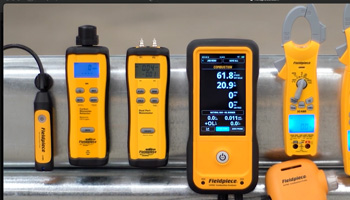
Categories
Blog

Three Ways to Continue Expanding Your HVACR Knowledge

Every day, it seems HVACR systems are evolving to work with new refrigerants, use less energy, and take advantage of new innovations. Since many customers want to use the best technology to heat and cool their homes and offices, staying up to date on these changes is crucial.

Market shifts also change the way that diagnostic tools are utilized. Staying up-to-date on both the latest HVACR systems as well as the tools used to diagnose and repair them has never been more important. Here are three ways that HVACR professionals can expand their knowledge and stay ahead of the curve.

  1. Stay Sharp

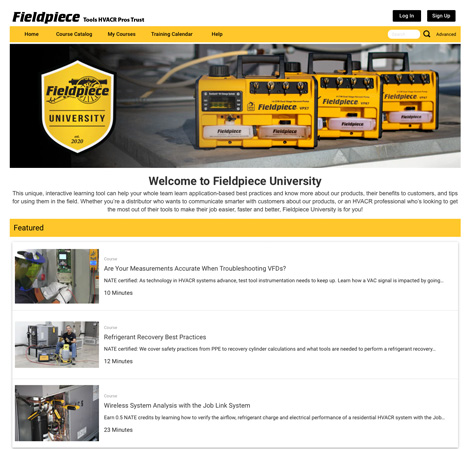
Continuing education can help a tech stay in the know and prepared for industry changes. Leveraging online tutorials, podcasts, videos, HVACR training meetings and conferences can help techs to learn the latest trends, stay current on emerging technologies, and utilize existing tools in the best ways possible. One such place is Fieldpiece University [LINK TO: https://www.fieldpiece.com/fieldpiece-university/]. This online resource was created to help HVACR technicians boost their skills and learn more about Fieldpiece products. These courses explore how each product benefits customers and offer Pro Tips for using them correctly in the field. This is an ideal tool for any HVACR professional looking to get the most from the tools they work with every day to get better, faster, and easier.

  1. Help others

Learning on the job is another way to grow. Try volunteering with local charities or churches for pro bono work and for neighbors in need. Helping a family maintain an older furnace through the winter is a great way to gain experience on a legacy system. In an ever-changing landscape of HVACR technology, familiarity with a range of systems both old and new is yet another important tool in a tech’s bag.  And helping your friends and neighbors adds an extra sense of accomplishment after a long day in the field.

  1. Listen to customers

Before a tech opens their tool bag and starts running diagnostic tests, it’s important to know what needs fixing. To do that, the most important tool in an HVACR techs arsenal is his or her ears. Start by asking questions. The customer doesn’t need to be an expert in HVACR to answer. Questions about symptoms they can see and feel in their spaces may lead to finding the problem. This could include even the simplest questions like: Does the system turn on? Do you hear any strange noises when it’s running? Does the system blow cold air? Does the system blow any air at all?

Letting the customer speak typically points in the direction of the real reason for the service call. The more useful information that’s gathered up front, the easier it can be to find the true cause of the issue.

If you’re looking to be a better HVACR tech tomorrow, start learning, helping and listening TODAY.

Categories
Blog

6 Points to Look for in an HVAC Combustion Analyzer

A combustion analyzer is a must-have tool for many HVAC professionals, especially those working in colder climates. It helps uncover issues that could lead to dangerous conditions, such as high levels of carbon monoxide.

You should look for six key features to ensure you get the most out of your combustion analyzer. This article details these features and why they are essential for HVAC professionals.


What Is a Combustion Analyzer?

A furnace uses the process of combustion to generate heat. Combustion occurs when oxygen, a fuel and a heat source are combined. In a natural gas furnace, the oxygen is provided by ambient air, the fuel is natural gas, and the heat source traditionally is a pilot light or a hot surface igniter. The right balance of these three elements will yield the most effective combustion.

Combustion analyzers help measure the safety and efficiency of heating appliances. Combustion analyzers complete this task by measuring the oxygen (O2), carbon monoxide (CO) and heat produced in the combustion. With this information, technicians diagnose potential problems and determine whether necessary adjustments or repairs are needed.


  1. Long-Lasting Sensors

Combustion analyzers typically have sensors to measure oxygen (O2) and carbon monoxide (CO). These sensors are tricky to maintain because they degrade by simply being exposed to the air. Meaning that whether the combustion analyzer is in use or not, the O2 and CO sensors are degrading over time. This leads to most sensors having to be replaced every year or two, which is expensive and increases the cost of ownership of the tool.  Look for a combustion analyzer with technology that manages this sensor degradation better.

A combustion analyzer’s sensors are vital in diagnosing and maintaining HVAC heating appliances. These sensors must be in good working order to ensure accurate results. Replacing faulty sensors is a costly endeavor which is why investing in a combustion analyzer with long-lasting sensors is vital.

Fieldpiece has patent-pending SensorVault™ technology that seals the O2 and CO sensors from exposure to air when the tool is powered off, thus prolonging the life of the sensors and lowering the overall cost of ownership. The Fieldpiece sensors are guaranteed to last for 4-years.


  1. Field Replaceable Sensors

Eventually, all oxygen and carbon monoxide sensors will need to be replaced and/or sent for calibration. This leads to downtime if the entire tool needs to be sent in.

Look for a combustion analyzer that has field-replaceable sensors to ensure little to no downtime when sensor replacement or calibration is needed.

The Fieldpiece combustion analyzers with field replaceable sensors include the CAT85 and CAT45 models. They allow technicians to swap out a bad sensor and get back to their job seamlessly. Plus, for calibration services, only the sensors need to be sent in. By having a backup pair of sensors on-hand, the combustion analyzer is ready to go.


  1. Water Trap Maintenance

Typical combustion analyzers have a water trap to condense and collect water vapor from the flue to prevent exposure to sensors. When the water trap fills up, the technician needs to remember to empty it or risk unreliable combustion readings or even potential damage to the tool. Plus, in colder climates a water trap filled with water can freeze in the truck overnight and crack the water trap. The best combustion analyzers protect the sensors from moisture with little to no water trap maintenance.

For example, the Fieldpiece CAT85 combustion analyzer features a patent-pending HydroCycle™ pump which condenses the water vapor and ejects it back into the flue pipe from where it came. Thus, it eliminates the need for a water trap all together.


  1. Live Draft Pressure

Harmful and often poisonous gasses are expelled outside by way of the exhaust flue pipe. In order to ensure that these unwanted gasses are flowing in the right direction the draft pressure in the flue should be measured. Most combustion analyzers will measure this draft pressure; however, typically it takes two separate tests to test for draft pressure and for proper combustion. Save some time by looking for a combustion analyzer that measures both draft and combustion at the same time.

The Fieldpiece combustion analyzer CAT85 measures a live draft pressure while simultaneously performing a combustion analysis. This not only saves time on the job, but uncovers any effects to the draft caused by adjustments made to the system or commonly vented appliances like a water heater.


  1. Dual Port Manometer

Checking for sufficient airflow through the furnace and verifying proper gas pressures at the gas regulator are essential for optimal system performance. A dual port manometer tool measures static pressures in the air handler to check for excessive airflow restrictions and measures gas pressures at the regulator. Typically, this is a separate tool the technician needs to carry to the job site.

The Fieldpiece combustion analyzer CAT85 has a built-in dual port manometer to streamline testing static pressures and dialing in the correct gas pressures at the regulator. Plus, it’s one less tool that needs to be carried to the job site.


  1. Ease of Use

When it comes to combustion analyzers, ease of use is essential. A combustion analyzer HVAC professionals can trust should be easy to set up and operate. It should have a large and easy-to-read display so technicians can diagnose issues with HVAC systems with speed and accuracy.

Additionally, apps help organize information for the technician and the customer. The Job Link® System App from Fieldpiece is an excellent example of how these apps can help streamline the job.

This app allows technicians to create, store and share combustion test results. These features make it easier than ever to provide customers with detailed reports. They also help you organize and pull up your data at later trips to the same customer.


Fieldpiece Combustion Analyzer Near Me

Finding a combustion analyzer with all these features may seem impossible. That is until you find out that Fieldpiece combustion analyzers provide all six necessary points and more.

Take advantage of HydroCycle™ pump and SensortVault™ technology while using our Job Link app with the CAT85 and CAT45 Fieldpiece Combustion Analyzers. Both models come with four-year sensor life warranty to lower the overall cost of ownership.

Find a Fieldpiece retailer near you to get the best HVAC combustion analyzer available!



Categories
Blog

The trends shaping HVACR in 2023

As we look to the new year, the landscape of the HVACR industry continues to evolve and change in new ways. Expected shifts come from new innovations in technology, market needs for greener products, an unpredictable global economy, supply chain issues and shifting energy demands—all of which promise to make 2023 a very exciting year.

The economy

Let’s start with inflation, a global recession and a supply chain that continues to struggle after the pandemic. Hopefully, as the pace of inflation eases throughout the year and the job market continues to be robust, this should help the economy continue its upward movement, improving construction numbers and the HVACR industry in general. However, even if the economy dips, existing systems will still need maintenance, so service and maintenance calls are going to continue to drive the growth of our business.

Going green

Something else driving our industry is decarbonization. This push accelerating throughout the world of HVACR is driven by climate change, the insecurity of world energy supplies and new legislation, like the Inflation Reduction Act. New heat pump technology could help customers move away from using fossil fuels to heat their homes – and big tax incentives are driving their implementation. This movement also encourages homeowners and businesses to retrofit existing systems to meet new standards. As HVACR technicians, staying current with these advances is critical.

Living healthy

Residential and commercial customers are asking for healthier, energy-efficient homes and buildings. They care about the comfort of their homes and their businesses, but they’re also focused on the well-being of the planet. As a result, they’re investing in systems and technologies that optimize energy use. In addition, the pandemic brought wellness, ventilation, air quality, thermal health and humidity to the forefront. All of this is going to shape our industry over the coming year.

New technology

As we move towards using more sustainable components and refrigerants in our systems, technology and innovation are both going to be key drivers. Throughout the last decade, we’ve witnessed the segment’s most significant technological revolution. We’re seeing new electronic tools, cloud-based solutions, higher efficiency ratings, mini-splits systems, new codes and new control strategies driving product development and helping HVACR systems deliver new solutions for customers. As HVACR technicians, we need to stay ahead of these advances which have the potential to transform how HVACR professionals are trained and how we do our jobs. 

Welcome to the new HVACR industry

It’s an exciting time to be part of an industry that benefits so many people every day. At Fieldpiece, we’re looking forward to developing the new tools that help HVACR techs install, diagnose and repair these evolving and ever more innovative systems. We’ll keep current of all the latest trends and help ensure that your tools are ready for the jobs to come!



Categories
Videos

OPEN FOR ENTRIES! | Fieldpiece’s #MasteroftheTrade Scholarship is Back!
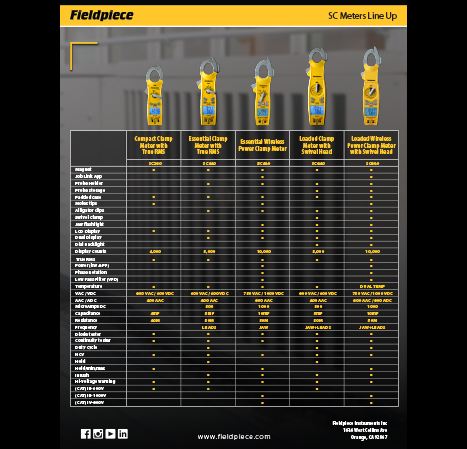
Fieldpiece is proud to announce its second annual #MasteroftheTrade Scholarship, designed to support the future of the HVACR community we love! This year, the #MasteroftheTrade Scholarship will support 13 SkillsUSA students studying HVACR in their junior or senior year of high school, as well as college and postsecondary students. Winners will be granted funds to further their HVACR education.

Categories
Videos

Fieldpiece Tools for HEATING SEASON

Check out Fieldpiece’s Heating Season portfolio and make sure you have what you need for these cold Winter months!

Categories
Blog

Three practices of great HVAC technicians

Most techs in the field want to be better, faster and more efficient at their jobs. Here are three things to focus on to help improve skills, satisfy customers and finish jobs more quickly and thoroughly.

First, focus on airflow.

HVACR is all about moving air around. No matter how efficiently a system runs, or how expertly it’s fine-tuned, if the ductwork is too small, makes too many bends, has blockages or large gaps or leaks—the space is not going to be properly cooled or heated. Techs can frequently focus on “the box” because that’s where the technology is, and they ignore the rest of the system. Seasoned technicians understand the importance of airflow when installing a system, making sure duct systems are correctly sized, contain fewer bends, and allow for free flow of air throughout the entire home.

If you’re changing out a system, consider repairing or replacing necessary ductwork as well. Remember, older systems may contain asbestos, requiring certified professionals to aid in removal. Even in newer systems, it remains important to test for leaks and efficiency, so always be prepared to make revisions that improve overall performance in the long run.

Second, look for obvious problems.

When assessing a system, start with the easy stuff. Be alert and look for things that are out of the ordinary and may be symptoms of bigger problems. For instance, refrigerant oil stains on the floor could mean a refrigerant leak in the system. Use a flashlight to visually inspect the evaporator coils and blower wheels. By examining them for dirt or corrosion, you could uncover what’s causing the issues. Another quick, easy fix is the air filter. Swapping it out with a clean one immediately improves airflow and circulation.

 Also, look for UV damage on control wiring. Sunlight tends to cause wiring to degrade prematurely, and this may adversely impact a system. By checking the entire system, it’s easy to judge the quality of workmanship and know how carefully to inspect other areas of the system.


Lastly, doublecheck your work.

No one intends to do subpar work, but sometimes steps are missed, and mistakes are made. Be sure to doublecheck everything throughout the day. This starts with caps and seals. Leaving them off is never OK. It’s a simple step to ensure they won’t be accidentally knocked onto the ground or lost behind a piece of equipment. Put caps and seals back on finger tight and snug hex flare caps up with a wrench.

When performing electrical work, don’t leave spade connections loose and don’t forget to properly torque contractor lugs. Also, never leave exposed wire. Strip back insulation to the length required to make the connection.

When the job is done and after performing a comprehensive run test at the end of a repair, do a final walk of the job and check all disconnects and set points. Also, perform a final cleanup and collect all tools. Leave nothing unchecked and nothing left behind.

While these three things are simple, they do help all HVACR techs work faster, safer and smarter on every job.