












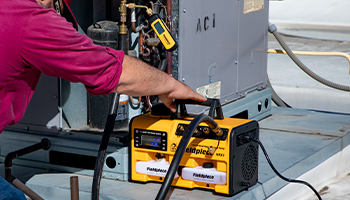
In HVAC work, few tools are as foundational as the vacuum pump. While gauges tell you what’s happening inside a system, the vacuum pump is what makes proper evacuation possible in the first place. Without it, moisture, air, and non-condensable gases remain trapped inside the system, compromising performance, efficiency, and longevity. For professional HVAC technicians, a reliable vacuum pump isn’t optional—it’s a core requirement for doing the job right.
What a Vacuum Pump Does in HVAC
A vacuum pump removes air, moisture, and contaminants from an HVAC system before refrigerant is introduced. During installation or service, systems can be exposed to the atmosphere, allowing moisture and non-condensables to enter. If these contaminants aren’t removed, they can cause elevated pressures, poor heat transfer, chemical reactions with oil and refrigerant, and eventual component failure.
A vacuum pump creates the low-pressure environment needed to boil off moisture and evacuate unwanted gases, preparing the system for a clean, efficient charge.
Why Proper Evacuation Matters
Protects System Performance
Moisture and air reduce efficiency by interfering with heat transfer and increasing operating pressures. A deep vacuum ensures the system can operate as designed from day one.
Prevents Long-Term Damage
Leftover moisture can combine with refrigerant and oil to form acids, leading to corrosion, compressor damage, and premature system failure. A vacuum pump helps protect the most expensive components in the system.
Supports Accurate Diagnostics
Evacuation isn’t just about pulling down pressure—it’s about verifying system integrity. When paired with a high-quality vacuum gauge, a vacuum pump allows technicians to confirm system tightness and identify leaks or trapped moisture before charging.
Reduces Callbacks
Skipping or rushing evacuation can lead to performance issues that show up weeks or months later. Using a proper vacuum pump helps ensure the job is done right the first time, saving time and protecting your reputation.
Why Every HVAC Technician Should Own Their Own Vacuum Pump
For professional technicians, relying on shared or outdated equipment can slow down jobs and introduce uncertainty. Owning a dependable vacuum pump means faster evacuations, consistent results, better quality control, and confidence when working on modern systems and refrigerants.
As HVAC systems evolve and tolerances become tighter, evacuation standards continue to rise. A quality vacuum pump ensures you can meet those standards on every call.
Fieldpiece: Designed for the Way Technicians Work
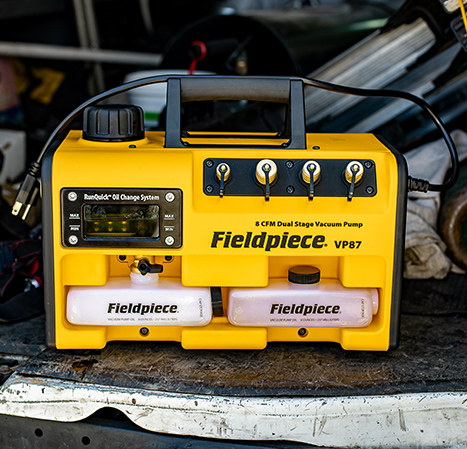
Fieldpiece vacuum pumps are designed to assist HVAC experts in achieving deep vacuums quickly, enhancing work efficiency. With the RunQuick® Oil Change System, technicians can change oil on the fly, even while the pump is under vacuum, helping maintain peak performance and reach a deep vacuum more quickly.
Fieldpiece offers a wide range of A2L-compatible vacuum pumps, so technicians can choose the pump that best fits their workload. The VPX7 delivers a powerful 10 cfm while remaining the lightest in its class at just 24 lbs. For mid-range needs, technicians can choose between two 8 cfm options: the VP87 and the NEW A3-compatible VP833. Rounding out the lineup is the reliable 6 cfm VP67.
Every Fieldpiece vacuum pump is a proven workhorse, purpose-built to reduce evacuation time, improve workflow efficiency, and keep technicians moving from job to job with confidence.
In Summary
A vacuum pump is one of the most important investments an HVAC technician can make. It protects the system, improves performance, prevents costly failures, and supports professional-grade work. With Fieldpiece’s experience designing tools specifically for HVAC technicians, you get equipment built to perform in the field. When evacuation matters, having the right vacuum pump makes all the difference. Check out our options today to find the one that works best for you!