




- Merchandise Shop
- Where to Buy
-

 English







 English
The HVACR industry has witnessed significant technological advancements in measurement and diagnostic tools over the years. From the era of analog refrigerant manifold gauges to modern digital gauges and wireless probes, the tools available to HVACR technicians have evolved to enhance accuracy, efficiency and convenience. Understanding the differences and strengths between these tools is crucial for technicians aiming to optimize their performance and service quality.
Analog Refrigerant Manifold Gauges
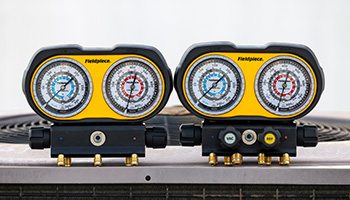
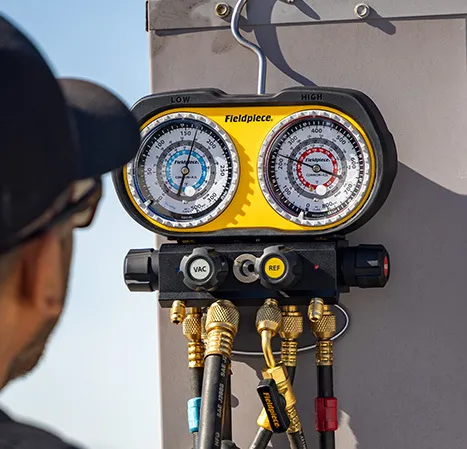
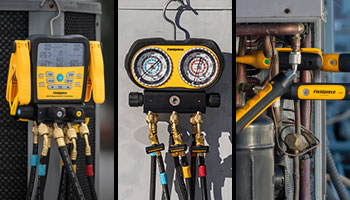
For decades, analog refrigerant manifold gauges were the standard in the HVACR industry. These tools allow for the addition and removal of refrigerant and measure system pressures while displaying saturation temperatures manually. They offer reliable and actionable data but require the use of additional instruments for anything outside of pressure and saturation temperature.
Analog gauges are often a great starting point for new technicians given their simplicity and lower price point. But they are far from “entry-level only” tools. Many experienced technicians keep an analog manifold in their truck alongside their digital tools because of their durability and reliability in tough environments.
One significant drawback of traditional analog gauges is the potential for inaccuracies due to human error and the inherent limitations of manual calculations. For instance, calculating superheat and subcooling with analog gauges involves multiple steps, including using a separate thermocouple for temperature readings and manual calculations based on pressure-temperature charts. This process is not only time-consuming but also prone to errors.
However, many technicians appreciate analog gauges for:
It’s also common for techs to own both digital and analog manifolds and choose between them depending on the job. Analog gauges remain a dependable, cost-effective solution that delivers solid performance when used correctly – especially when built with durability and reliability in mind, like the new Fieldpiece analog gauge sets.
Digital Refrigerant Manifold Gauges
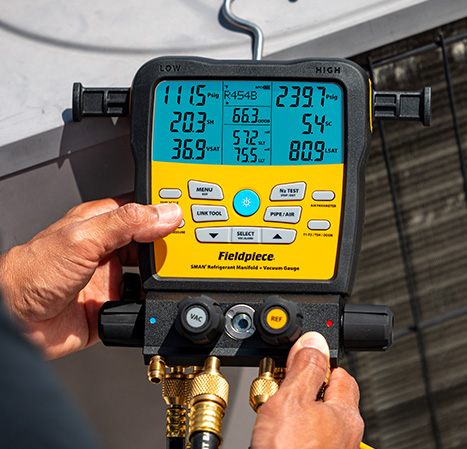
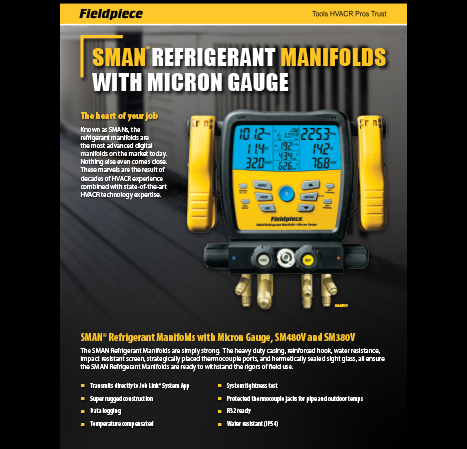
The introduction of digital refrigerant manifold gauges revolutionized the HVACR industry. Digital manifolds, such as the Fieldpiece SMAN® Series, offer several advantages over their analog counterparts:
Digital manifolds have simplified the workflow for HVACR technicians, allowing them to take accurate measurements and adjust refrigerant levels quickly and efficiently.
Wireless Probes
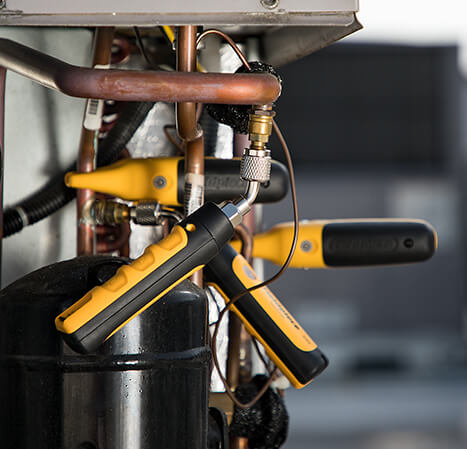
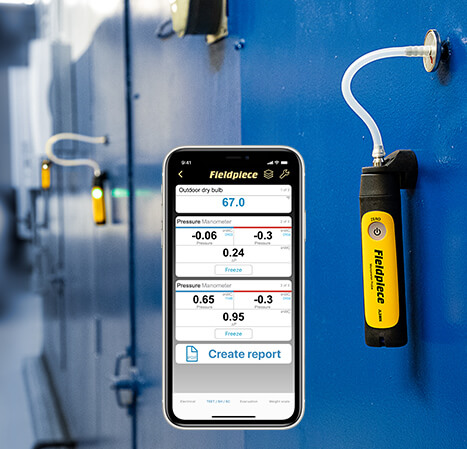
Wireless probes represent the latest advancement in HVACR diagnostic tools. These compact instruments allow a technician to remotely take readings both inside and outside a home, with some allowing for data aggregation and calculation on smart devices. Wireless ranges for these devices can vary, with some reaching up to 1000 ft for access to live measurements on large job sites. For example, usage of wireless psychrometer probes to measure Delta T eliminates the need for a technician to repeatedly walk inside and outside to take readings.
The compact size of most probes also makes optimal placement in tight spaces or cramped service ports easier, which is crucial for achieving accurate readings. One of the few drawbacks to a wireless probe kit would be that adding or removing refrigerant will still require an additional tool in your configuration, such as a T-fitting or a valve core removal tool. However, system checks and quick diagnostics are more than possible with a well-rounded probe kit.
The Fieldpiece JL3KH6 Charge and Air Kit is one example, featuring Wireless Pipe Clamps, Pressure Probes, and Flexible Psychrometers. A comprehensive probe kit can be a technician’s best resource for conducting fast and efficient system diagnostics, making it an industry staple.
Choosing the Right Tool
When deciding between analog gauges, digital manifolds and wireless probes, HVACR technicians should consider their specific needs, workflow and jobsite conditions.
Wireless probes are ideal for technicians who value precision and efficiency on jobs that require a quick snapshot of system readings. However, if using a mobile device is not feasible due to environmental conditions or personal preference, digital and analog manifolds remain robust alternatives.
In conclusion, the choice between analog, digital and wireless tools depends on the technician’s workflow and the specific requirements of the job. Embracing modern technologies like digital manifolds and wireless probes can significantly enhance diagnostic accuracy and service efficiency. At the same time, sticking with fundamental tools like rugged analog gauges – especially modernized versions built for today’s demands – ensures technicians always have a dependable back up option in the truck.