




- Merchandise Shop
- Where to Buy
-

 English











 English
HVACR technicians already know the basic recovery process. Recover refrigerant. Pull a vacuum. Charge the system. Repeat.
What separates a high-performance tech is how fast you can move through that process without sacrificing quality of work.
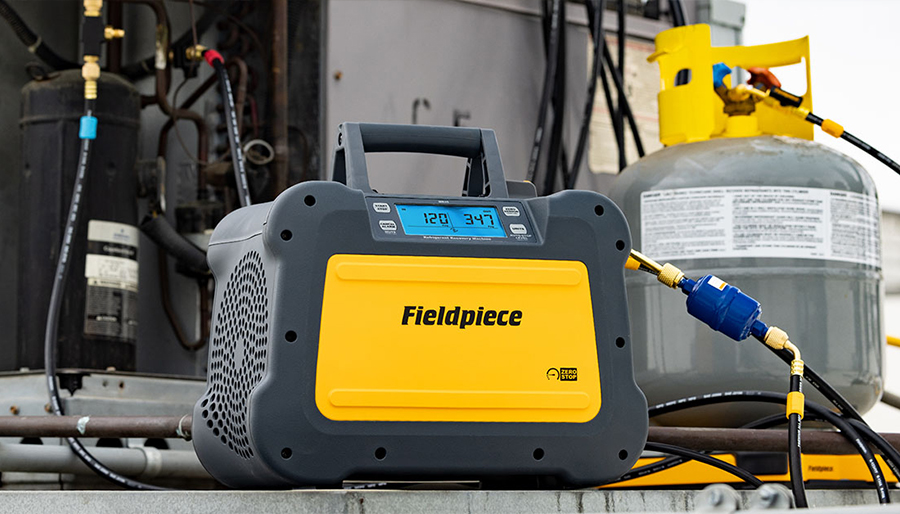
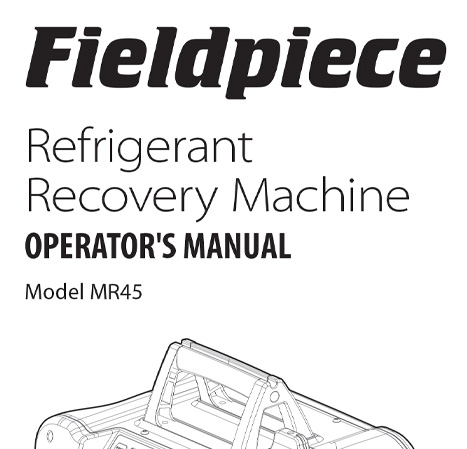
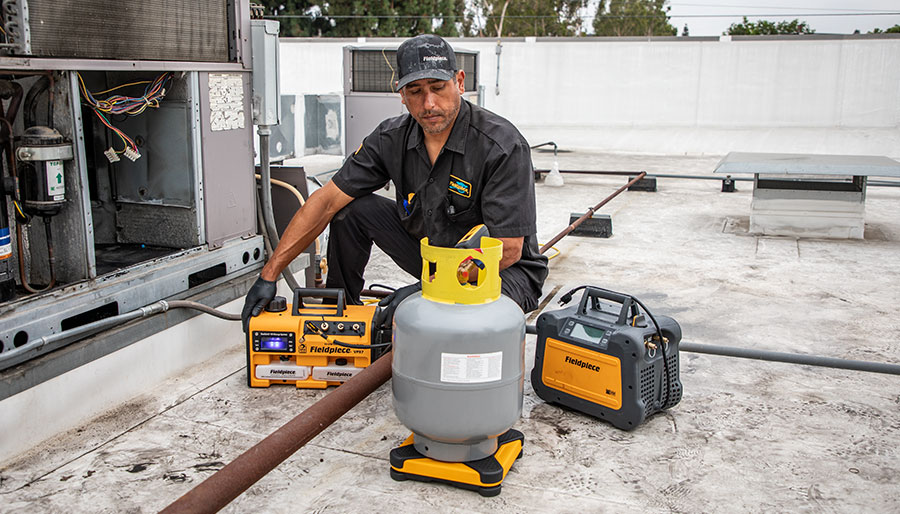
That’s where the combination of the Fieldpiece MR45 Digital Refrigerant Recovery Machine, Fieldpiece SR47 Wireless Refrigerant Scale, and Fieldpiece vacuum pumps like the VPX7 really matter.
Individually, they’re powerful tools. Together, they help create a smoother workflow from recovery to charge – helping technicians save time, reduce guesswork, and avoid the small slowdowns that add up over the course of a long day.
Refrigerant Recovery is Faster When Your Tools Work with You
Every technician has dealt with recovery jobs that can slow your day down to a crawl.
Heavy machines. Constant babysitting. Slugging issues. Recovery cylinders that need constant checking. Walking back and forth across the jobsite just to monitor progress.
The MR45 was designed to remove a lot of that friction from the process.
Its smart variable-speed DC motor automatically adjusts throughout recovery – slowing down during liquid recovery to help minimize slugging and ramping up during vapor recovery to keep things running smoothly. Instead of constantly adjusting your process around the machine, the machine adjusts itself to the job.
Then there’s Zero Stop.
It’s one of those features technicians quickly get used to because it removes one more thing to think about. Instead of standing around waiting for the machine to hit zero pressure, the MR45 automatically shuts itself off to help protect refrigerant purity by reducing the pull of contaminants into the tank.
Small feature. Big impact.
The SR47 Does More Than Just Measure Weight
A refrigerant scale might not be the flashiest tool on the truck, but it plays a significant role in almost every major refrigerant-related task.
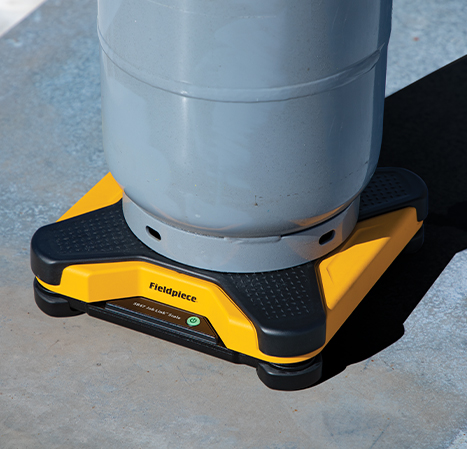
During recovery, the Fieldpiece SR47 Wireless Refrigerant Scale helps technicians keep an eye on tank weight without hovering over the recovery cylinder the entire time.
And on bigger jobs, that matters more than people think.
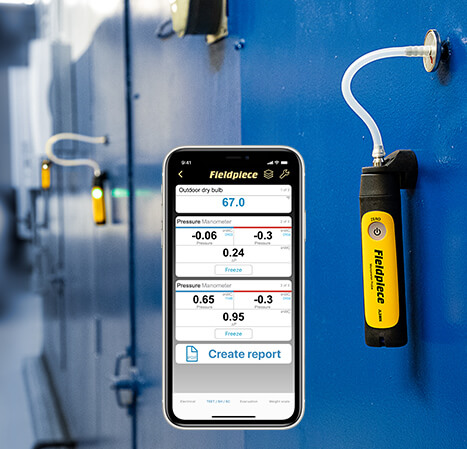
Instead of walking back and forth to check tank levels, technicians can monitor measurements remotely through the Job Link® System App – and easily document recovered and charged refrigerant.
It also helps avoid a recovery danger: overfilling a recovery tank.
During charging, the SR47 becomes just as valuable again by helping technicians dial in accurate refrigerant charges with confidence.
Vacuum Speed Isn’t Just About CFM
A lot of evacuation conversations focus only on pump size or CFM ratings.
But experienced technicians know evacuation speed often comes down to the entire setup:
That’s why Fieldpiece vacuum pumps are designed around workflow improvements instead of just raw specs.
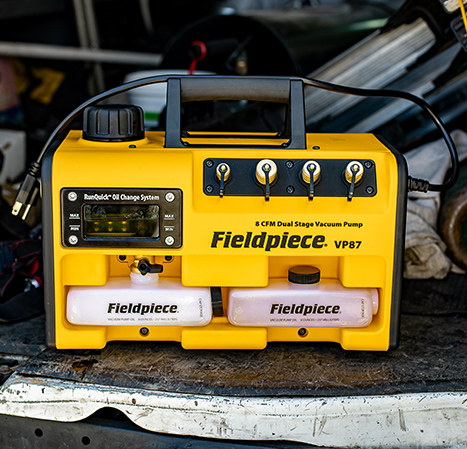
Take RunQuick® oil changes, for example.
Changing vacuum pump oil is important, but it’s also one of those tasks technicians sometimes put off because it interrupts the job. The longer oil stays contaminated with moisture, the slower evacuation performance becomes.
RunQuick helps remove that barrier by allowing technicians to change oil quickly without shutting the pump down or losing vacuum.
That means technicians are more likely to keep fresh oil in the pump – and that directly impacts evacuation speed.
It’s a simple example of how shaving small amounts of downtime from each step can make a noticeable difference across multiple jobs in a day.
The Real Advantage Is Workflow
What makes these tools work well together isn’t just wireless connectivity or matching product lines. It’s that each one removes a different bottleneck from the refrigerant service process.
The MR45 helps speed up recovery while reducing babysitting. The SR47 simplifies refrigerant tracking during both recovery and charging. Fieldpiece vacuum pumps help technicians evacuate systems faster while making maintenance easier and less disruptive.
Individually, each saves a little time. Together, those improvements compound across every service call. And that’s what technicians notice most in the field. Not just that the tools work – but that the workflow feels smoother.