




- Merchandise Shop
- Where to Buy
-

 English













 English
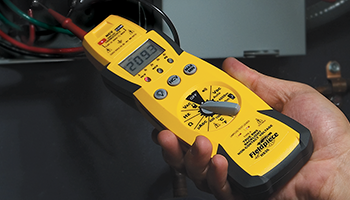
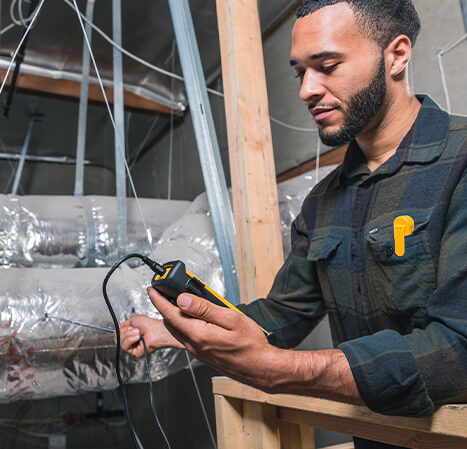
Electric faults in HVAC systems often hide behind control panels and wiring harnesses, defying visual inspection. A digital multimeter solves this mystery by combining voltage, current, and resistance tests into one handheld instrument. Clear numerical readouts on a backlit screen enable you to verify every electrical parameter quickly and accurately, revealing problems that cannot be detected by sight alone. The digital multimeter is the cornerstone of HVAC electrical diagnostics, reducing guesswork and ensuring components operate within specification.
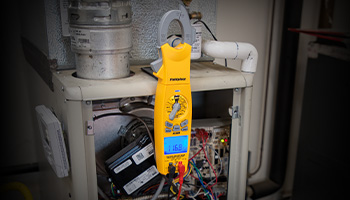
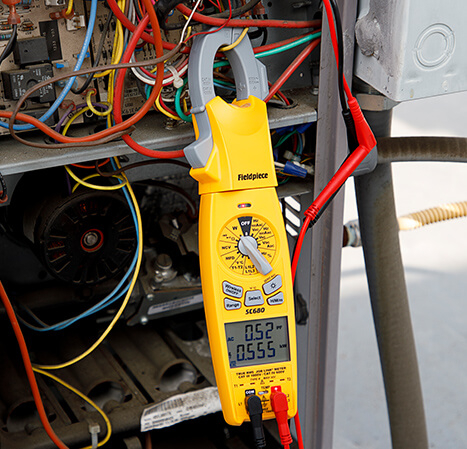
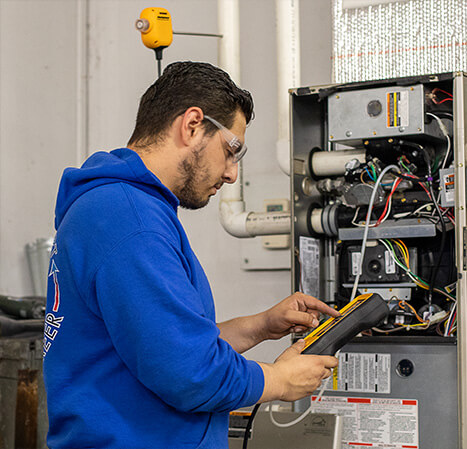
In the field, the digital multimeter serves multiple purposes. To begin, you can confirm all high and low voltage values are correct, ensuring thermostats, relays, and circuit boards receive proper power. Next, you can measure resistance in motor windings and pressure switches to detect winding short-to-ground issues or switch failures. When flame rectification systems act up, the meter’s microamp range shows whether the flame sensor draws the correct current. If you suspect a compressor overload, you can use an amp clamp to assess inrush current without breaking the circuit. You can also perform EEV resistance and capacitance testing. Each test delivers objective data so you can pinpoint faults and complete repairs right the first time.
Older analog meters rely on moving needles that can lag or suffer from parallax errors under low light. By contrast, a digital display provides exact values in real time. Auto-ranging models eliminate the need to hunt for the correct scale, letting you focus on probe placement rather than dial settings. True RMS functionality ensures accurate readings when testing variable frequency drives, which produce irregular waveforms that standard meters cannot interpret reliably. These advantages lead to faster diagnostics, fewer callbacks, and improved safety.
Not every meter meets HVAC demands. Safety ratings such as CAT III and CAT IV are essential when working on building wiring and industrial panels to protect against high-energy transients. Measurement ranges should cover at least 0 to 600 V AC/DC, with fine resolution for low-voltage control circuits. Durable housing helps resist drops, dust, and moisture common on job sites. Non-contact voltage detection allows you to identify live conductors before probing, adding another layer of protection. Features like interchangeable accessory heads expand functionality and improve efficiency.
The HS36 is engineered with HVAC professionals in mind. It delivers True RMS readings for voltage and current, plus a microamp range for flame sensor testing. A built-in non-contact voltage detector alerts you to live circuits before you begin and auto-range and data-hold functions allow one-handed operation, so your free hand can stabilize wiring or hold other tools. Rugged, rubberized construction ensures the HS36 withstands everyday drops and impacts.
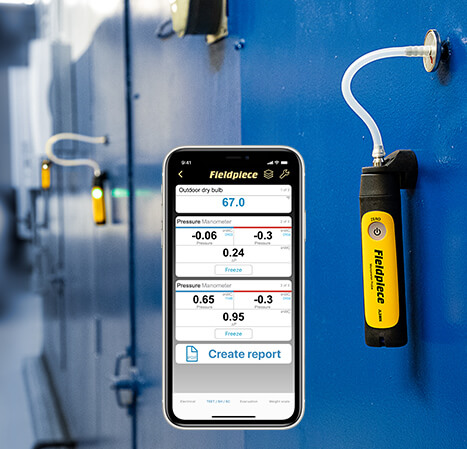
Interchangeable accessory heads provide significant benefits in terms of versatility and efficiency, allowing you to convert the stick meter into amp clamp (when used with the ACH4) or a vane anemometer (when coupled with the AAV3), allowing technicians to carry a range of testing capabilities in a smaller, lighter kit.
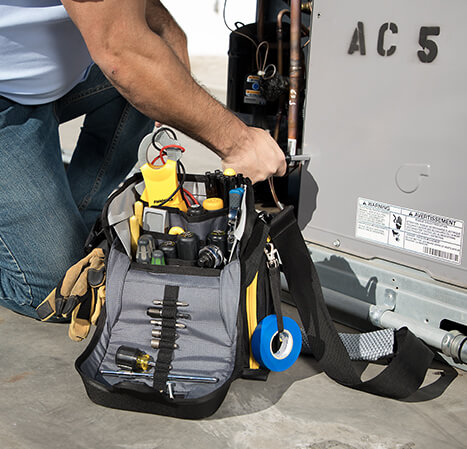
A digital multimeter is a critical component of every HVAC technician’s toolkit, delivering the precise measurements you need to diagnose electrical issues safely and efficiently. With the HS36 model, you gain True RMS accuracy, microamp testing for flame rectification, one-handed operation, and modular expandability, all wrapped in a rugged design built to withstand daily jobsite demands.
To equip yourself with a purpose-built meter that accelerates troubleshooting and reduces callbacks, browse our full lineup of Fieldpiece digital multimeters and find the model that best fits your service needs.